Inflation in Canada is still affecting household budgets in 2026, but the headline number does not tell the whole story.
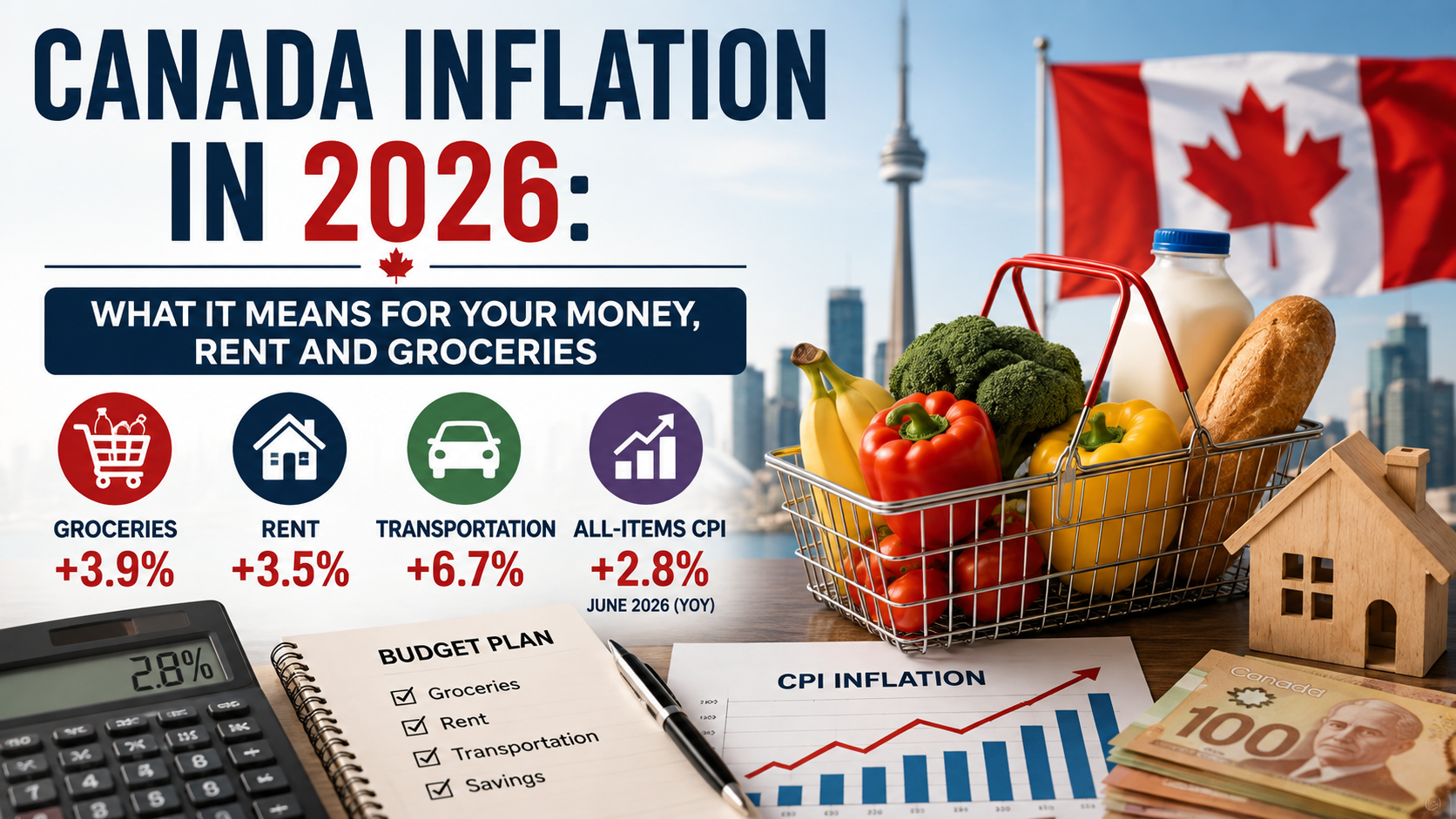
Statistics Canada's Consumer Price Index (CPI) increased 2.8% year over year in June 2026. That was lower than the 3.2% increase recorded in May, but different parts of the household budget continued to move at very different rates.
Food purchased from stores was 3.9% more expensive than a year earlier, transportation prices were up 6.7%, shelter increased 1.5%, and rent rose 3.5% nationally.
This guide explains what those numbers actually mean, why your personal experience with inflation may feel different from the national rate, and what Canadians can watch when planning their budgets.
Canada Inflation in 2026: The Latest Numbers
| Category | June 2026 Year-over-Year Change |
|---|---|
| All-items CPI | +2.8% |
| Food purchased from stores | +3.9% |
| Shelter | +1.5% |
| Rent | +3.5% |
| Transportation | +6.7% |
Source: Statistics Canada, Consumer Price Index, June 2026. These figures represent national year-over-year changes and do not mean every household experienced the same increase.
What Does a 2.8% Inflation Rate Actually Mean?
One of the most common misunderstandings about inflation is assuming that a 2.8% inflation rate means everything in Canada became exactly 2.8% more expensive.
It does not.
The Consumer Price Index tracks the change in prices of a basket of goods and services purchased by consumers. Different components of that basket can move at very different rates.
That is exactly what the June 2026 numbers show. Overall inflation was 2.8%, while grocery prices increased 3.9% and transportation increased 6.7% year over year.
At the same time, other categories experienced smaller increases or even price declines.
Inflation Slowing Does Not Mean Prices Are Falling
This distinction is particularly important.
If inflation falls from 4% to 2.8%, that generally means prices are increasing more slowly. It does not mean prices have returned to where they were several years ago.
Imagine a hypothetical item that cost C$100 and then increased to C$104. If its price rises another 2%, it becomes approximately C$106.08.
The inflation rate has slowed, but the price level is still higher.
This helps explain why households can continue feeling financial pressure even after inflation moves closer to the Bank of Canada's target.
What Is the Bank of Canada's Inflation Target?
The Bank of Canada conducts monetary policy with the objective of keeping inflation around the 2% midpoint of a 1% to 3% target range.
Inflation does not have to equal exactly 2% every month. Prices are constantly being affected by changes in energy markets, housing, consumer demand, global supply chains and many other factors.
As of its July 15, 2026 decision, the Bank of Canada maintained its target for the overnight rate at 2.25%.
In its July Monetary Policy Report, the Bank said Canada's economy had been weak but was showing signs of improvement and projected inflation to ease toward approximately 2%, while emphasizing that uncertainty remained elevated.
Why Groceries Can Feel More Expensive Than the Inflation Rate
Groceries are one of the expenses households notice most because they are purchased frequently.
Statistics Canada reported that prices for food purchased from stores increased 3.9% year over year in June 2026.
That was slower than the 4.3% increase recorded in May, but it remained above the 2.8% all-items inflation rate.
Individual grocery categories also moved differently. For example, Statistics Canada reported a 6.5% year-over-year increase in meat prices in June.
This is why two households can experience food inflation very differently. A family that buys more products experiencing large price increases may feel substantially more pressure than someone whose shopping basket is concentrated in categories with stable prices.
A Simple Grocery Budget Example
Consider a household that hypothetically spent C$800 per month on groceries one year ago.
If its exact grocery basket increased by 3.9%, that same basket would cost approximately C$831.20.
| Example | Amount |
|---|---|
| Previous monthly grocery budget | C$800.00 |
| Hypothetical 3.9% increase | C$31.20 |
| New monthly cost | C$831.20 |
| Approximate additional annual cost | C$374.40 |
This is only an illustration. The CPI measures average price changes across a broad basket; it does not predict the exact change in an individual family's grocery bill.
What Is Happening With Rent?
Housing remains one of the largest expenses for many Canadian households.
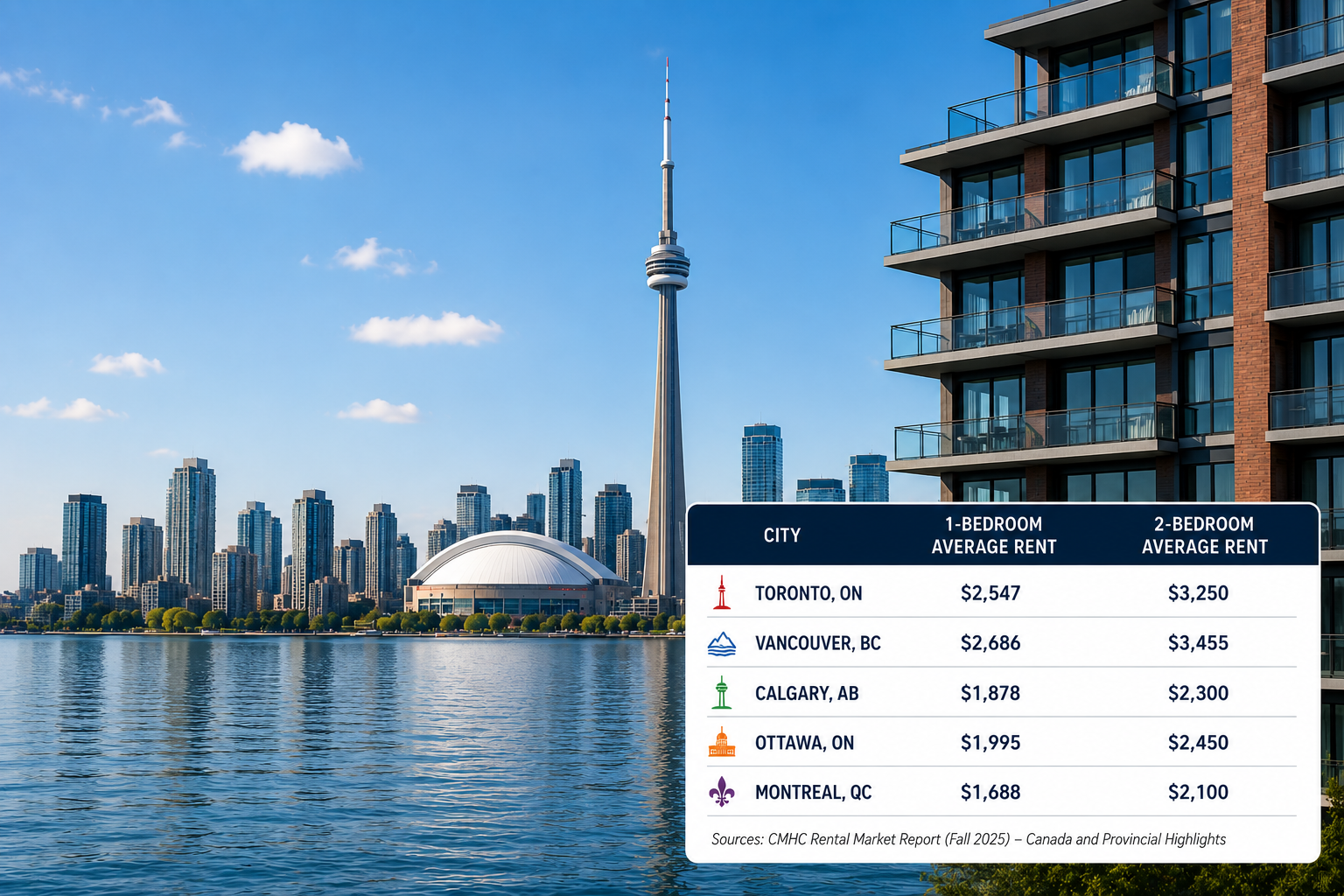
In June 2026, Statistics Canada's CPI data showed shelter prices up 1.5% year over year nationally. Within shelter, the rent index increased 3.5%.
Rent deserves separate attention because the national figure can hide significant differences between cities, provinces and individual tenants.
Someone renewing an existing arrangement can face a different situation from a person searching for a new apartment.
It is also important to put recent increases into a longer-term perspective. Statistics Canada reported that national rent prices had risen 28.5% between 2020 and 2025, despite rent inflation slowing during 2025.
So even when the annual rate of increase slows, many renters are paying considerably more than they were several years ago.
Shelter Inflation Is More Than Rent
The shelter component of the CPI includes more than what tenants pay their landlords.
Housing costs can also be influenced by components related to homeownership and other shelter expenses.
That means the 1.5% shelter inflation figure should not be interpreted as saying that every Canadian's housing bill increased exactly 1.5%.
A renter, a homeowner with a mortgage and a homeowner without a mortgage can experience very different financial pressures.
Transportation Was Rising Faster
Transportation stood out in the June 2026 CPI report, increasing 6.7% compared with a year earlier.
Transportation costs matter because they can affect household finances both directly and indirectly.
For an individual household, transportation expenses may include:
- Fuel
- Vehicle purchases
- Insurance
- Maintenance
- Public transportation
- Parking
The exact effect depends heavily on lifestyle. Someone who works from home and does not own a vehicle may experience transportation inflation very differently from a household that drives long distances every day.
Your Personal Inflation Rate Can Be Different
The national CPI is extremely useful for understanding price trends across Canada, but no individual household buys exactly the same basket used in the index.
Consider two hypothetical households.
| Household A | Household B |
|---|---|
| Rents an apartment | Owns a mortgage-free home |
| Uses public transit | Owns two vehicles |
| Large grocery budget | Smaller grocery budget |
| No major vehicle expenses | High fuel and maintenance costs |
Even if both households live in Canada, changes in food, rent and transportation prices affect them differently.
That is why your own budget may feel as though inflation is much higher — or lower — than the national headline number.
Inflation and Your Paycheque
Inflation matters not only because prices change, but because purchasing power changes.
If your income rises more slowly than the cost of the goods and services you purchase, your budget can become tighter even though your nominal salary increased.
For example, imagine someone earning C$60,000 receives a 2% raise while their personal cost of living increases by 3%.
They are earning more dollars, but those dollars may not buy as much as before.
The opposite can also happen. If wages increase faster than someone's personal expenses, their purchasing power can improve.
If you want more context on Canadian earnings, see our guide to average salaries in Canada in 2026.
Inflation and Interest Rates
Inflation also matters because it influences Bank of Canada monetary policy.
The Bank's policy interest rate affects borrowing conditions throughout the economy, although changes do not translate one-for-one or immediately into every consumer rate.
It can influence:
- Variable-rate mortgages
- Some lines of credit
- Business borrowing
- Some savings rates
- Broader lending conditions
As of July 15, 2026, the Bank of Canada had maintained the overnight rate at 2.25%.
Future decisions will depend on economic data and the Bank's assessment of the inflation outlook. Households should therefore be cautious about making financial plans based on assumptions that interest rates will definitely rise or fall on a particular schedule.
How Inflation Affects Savings
Inflation can also reduce the purchasing power of money that earns little or no return.
Suppose C$10,000 could purchase a certain basket of goods today. If those goods become more expensive over time while the C$10,000 remains unchanged, that money will purchase less.
This does not mean every dollar of savings should be invested. Emergency funds serve an important purpose, and investments involve different levels of risk.
The key concept is that the nominal number in an account and its real purchasing power are not the same thing.
How to Adjust a Household Budget for Inflation
You cannot control national inflation, but you can measure what is happening inside your own household.
A practical starting point is to compare recent spending with spending from several months earlier.
Separate expenses into categories such as:
- Housing
- Groceries
- Transportation
- Utilities
- Insurance
- Debt payments
- Subscriptions
- Entertainment
- Savings
Then identify which categories actually increased.
This is more useful than automatically cutting every expense by the same percentage.
Focus on Large Recurring Expenses First
Small savings can add up, but the largest recurring expenses usually have the greatest effect on a household budget.
For many Canadians, those are housing, transportation and food.
Consider whether there are realistic opportunities to:
- Compare insurance or service plans when renewal arrives
- Reduce unnecessary recurring subscriptions
- Plan grocery purchases around what the household actually consumes
- Reduce food waste
- Review transportation costs
- Prioritize high-cost debt where appropriate
The goal is not to eliminate every enjoyable expense. It is to understand where your money is going and whether that spending still matches your priorities.
Do Not Confuse Lower Inflation With Lower Cost of Living
This may be the most important takeaway from Canada's 2026 inflation numbers.
Inflation can move closer to the Bank of Canada's 2% target while households continue facing a high cost of living.
Those statements are not contradictory.
Inflation measures how quickly prices are changing. The cost of living reflects the actual level of expenses households need to pay.
After several years of price increases, slower inflation means those prices may be rising more gradually — not that previous increases have disappeared.
What Canadians Should Watch Next
Inflation data are released monthly, so one month's number should not be viewed in isolation.
Useful indicators to watch include:
- Headline CPI
- Food prices
- Shelter and rent
- Transportation and energy
- Bank of Canada core inflation measures
- Wage growth
- Bank of Canada interest-rate decisions
The next CPI release can change the picture again. Rather than trying to predict every monthly movement, households can use the data as context for their own financial decisions.
Final Thoughts
Canada's 2.8% inflation rate in June 2026 tells us that consumer prices overall were still higher than a year earlier, but it does not describe every household's experience.
Groceries were rising faster than headline inflation, rent continued to increase, and transportation recorded a notably larger year-over-year increase.
For Canadians managing a household budget, the most useful response is to look beyond the headline number and track the expenses that actually matter to them.
Inflation statistics provide the national picture. Your bank statements, grocery receipts, rent or mortgage costs and transportation expenses provide the personal one.
For more context on major household expenses, read our guide to how much money you need to live in Canada and our breakdown of average rent in Canada in 2026.
This article is for general informational purposes only and does not constitute financial advice. Inflation, housing and other economic conditions can change, and individual circumstances vary.