Starting a business in Canada can be an attractive option for entrepreneurs who want to turn an idea, skill or service into a source of income. But before accepting your first customer, it is important to understand how business registration, taxes, permits, banking and record keeping work.
The process is not necessarily complicated, but the exact requirements depend on where you live, the type of business you operate and whether you choose to work as a sole proprietor, partnership or corporation.
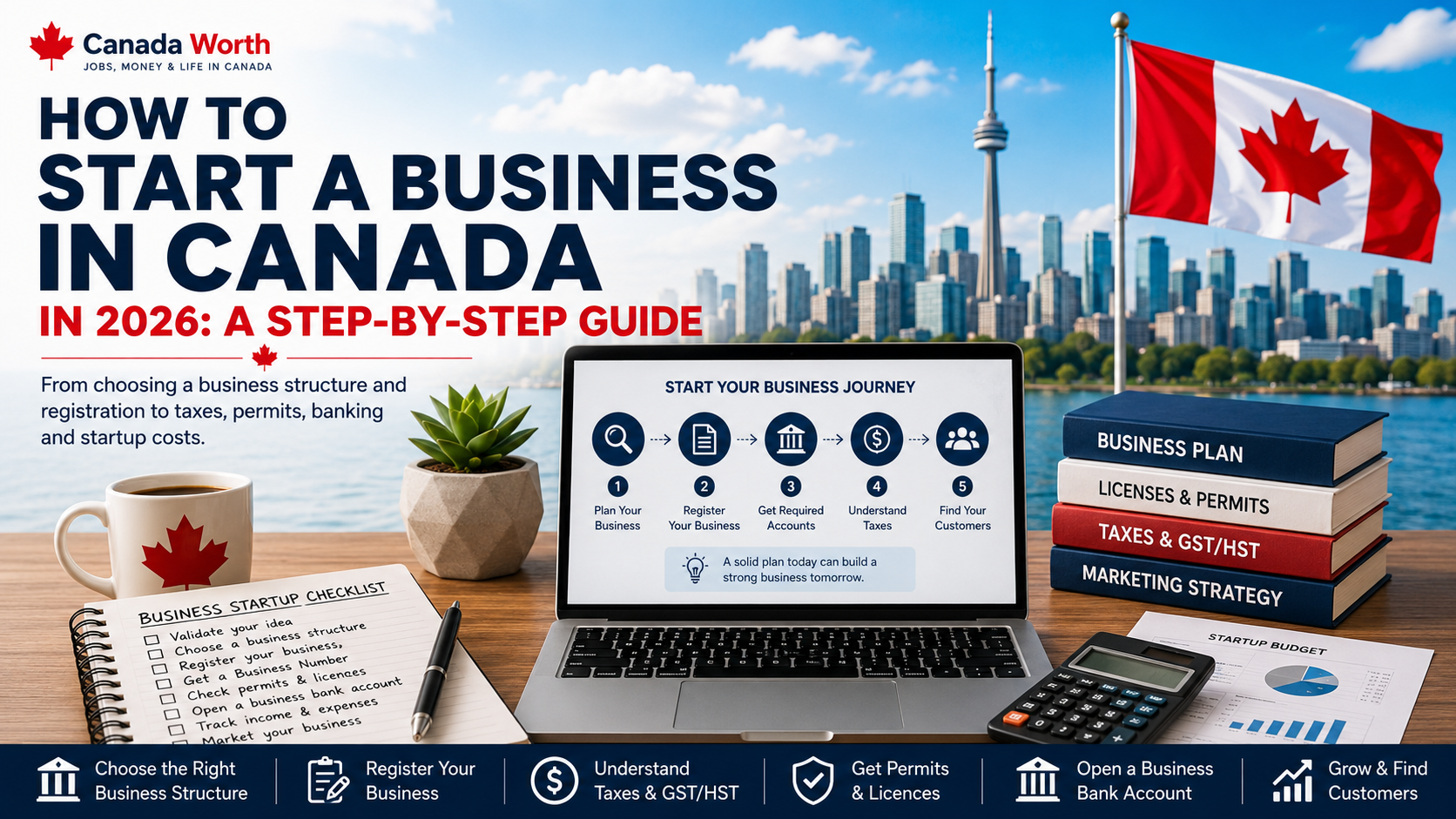
This guide explains the main steps to start a business in Canada in 2026, including registration, business numbers, GST/HST, permits, banking and some of the costs new entrepreneurs should consider.
1. Decide What Type of Business You Want to Start
The first step is deciding exactly what your business will sell and who your customers will be. A business does not necessarily need a physical storefront. Many Canadians start with service businesses, online businesses, consulting, freelancing or other operations that can initially be run from home.
Before registering anything, think about the problem your business solves, who is likely to pay for the product or service and approximately how much it will cost to operate.
If you are mainly looking for ways to earn additional income before building a larger company, our guide to the best side hustles in Canada covers several ways people can generate extra income.
2. Choose a Business Structure
One of the most important decisions is choosing the legal structure of your business. In Canada, common structures include sole proprietorships, partnerships and corporations.
Sole Proprietorship
A sole proprietorship is generally one of the simplest ways for an individual to operate a business. The owner and the business are not legally separate in the same way they would be with a corporation.
This structure may be suitable for freelancers, contractors and small businesses that are just getting started. However, the owner may also be personally responsible for business debts and obligations.
Partnership
A partnership involves two or more people operating a business together. Depending on the arrangement and province or territory, different rules may apply.
A written partnership agreement can help clarify responsibilities, ownership percentages, profit distribution and what happens if one partner leaves the business.
Corporation
A corporation is a separate legal entity from its owners. Incorporation can provide advantages in certain situations, including limited liability, but it also introduces additional administrative, accounting and tax responsibilities.
The Government of Canada provides information about choosing a business structure through its official business structure guidance.
3. Choose Your Business Name
Your business name is an important part of your brand, but choosing a name involves more than marketing.
Before registering a business name, check whether another business is already using the same or a confusingly similar name. Registration requirements vary depending on the province or territory and the business structure.
Some sole proprietors operating under their own legal name may face different registration requirements from businesses operating under a separate trade name.
4. Register Your Business
Business registration in Canada can happen at the federal, provincial or territorial level depending on the structure and location of the company.
The Government of Canada's official business registration information explains the major registration steps and directs entrepreneurs to the appropriate federal and provincial resources.
Registration costs vary. Some small businesses may only need relatively inexpensive provincial registration, while incorporation and professional assistance can increase startup costs considerably.
5. Get a Business Number When Required
A Business Number, commonly called a BN, is a nine-digit identifier used by the Canada Revenue Agency for businesses interacting with certain federal government programs.
Depending on your business activities, you may need CRA program accounts connected to your Business Number, such as GST/HST, payroll or corporation income tax accounts.
You can find current information about Business Numbers directly from the Canada Revenue Agency.
6. Understand GST/HST Registration
One tax issue new business owners should understand is GST/HST registration.
According to the Canada Revenue Agency, many businesses are considered small suppliers when their worldwide taxable supplies do not exceed $30,000 over the applicable period. Businesses that exceed the threshold may be required to register for GST/HST, although specific rules and exceptions can apply.
Some businesses may also choose to register voluntarily before reaching the mandatory threshold.
Because tax rules can change and individual situations differ, always verify the current requirements using the CRA's official GST/HST information for businesses.
7. Check Which Licences and Permits You Need
Registering a company does not automatically mean you have every licence required to operate it.
Depending on your industry and location, you could need municipal, provincial, territorial or federal licences and permits.
Restaurants, construction businesses, transportation companies, childcare providers and many other regulated activities can have additional requirements.
Canada's BizPaL service can help entrepreneurs identify permits and licences that may apply based on their business activity and location.
8. Open a Separate Business Bank Account
Keeping personal and business finances separate can make bookkeeping significantly easier.
A dedicated business account allows you to track revenue, expenses, supplier payments and tax-related transactions without mixing them with everyday personal spending.
Bank fees and account features vary considerably, so compare monthly fees, transaction limits, e-Transfer policies and other services before choosing an account.
If you are still learning how Canada's banking system works, read our complete guide to banking in Canada for newcomers.
9. Create a Startup Budget
Some businesses can be started with very little money, while others require substantial upfront investment.
Potential startup expenses include:
- Business registration or incorporation fees
- Licences and permits
- Insurance
- Equipment and tools
- Website and domain costs
- Advertising and marketing
- Inventory
- Professional accounting or legal services
- Office or commercial rent
- Business banking fees
Try to separate one-time startup expenses from recurring monthly expenses. This makes it easier to estimate how much revenue the company must generate before becoming profitable.
10. Understand Your Personal Living Costs Too
New entrepreneurs sometimes focus entirely on business expenses and forget that they still need enough money to cover their personal living costs while the company grows.
This is particularly important because a new business may take months before generating predictable income.
Housing is often one of the largest expenses. Our analysis of average rent in Canada in 2026 can help you understand how housing costs vary between Canadian cities.
You can also read our guide explaining how much money you may need to live in Canada when planning your personal budget.
11. Keep Accurate Financial Records
Good bookkeeping should begin with the first business transaction, not when tax season arrives.
Keep records of business income and expenses, invoices, receipts, contracts and other documents related to the company's finances.
The CRA provides official guidance about keeping business records, including information about the types of records businesses should maintain.
Accounting software can simplify this process, but some business owners may prefer working with a bookkeeper or accountant, especially as the company grows.
12. Understand Business Taxes
The way business income is taxed depends partly on the structure of the company.
For example, income from a sole proprietorship is generally reported differently from income earned by a corporation.
Your tax obligations can also depend on factors such as employees, GST/HST registration and the province or territory where the business operates.
Do not assume that every dollar entering your business account is personal spending money. Setting aside money for taxes can prevent unpleasant surprises later.
13. Consider Business Insurance
Insurance requirements vary significantly by business type. Depending on what your company does, you may want or need coverage such as commercial general liability insurance, professional liability insurance, commercial property insurance or commercial vehicle insurance.
Landlords, clients and contracts may sometimes require specific coverage before allowing a business to operate or provide services.
14. Build Business Credit Carefully
As your company grows, access to financing can become increasingly important.
Business credit cards, lines of credit and loans can help finance operations, but borrowing also creates financial obligations. Avoid using credit simply because it is available.
If you are still establishing your personal credit history in Canada, our guide on how to build credit in Canada explains the fundamentals.
15. Understand the Rules Before Hiring Employees
Hiring employees introduces additional responsibilities.
Employers may need to manage payroll deductions, income tax, Canada Pension Plan contributions, Employment Insurance premiums and provincial employment standards.
The CRA provides detailed information about payroll responsibilities for employers.
Employment rules can vary by province or territory, so employers should also review the employment standards that apply where their workers are located.
How Much Does It Cost to Start a Business in Canada?
There is no single startup cost that applies to every Canadian business.
A freelancer working from home may be able to begin with registration, a computer and a few software subscriptions. A restaurant, retail store or construction company may require tens of thousands of dollars or more for equipment, inventory, commercial space, insurance and permits.
| Expense | Possible Cost Level |
|---|---|
| Business registration | Low to moderate |
| Incorporation | Moderate |
| Website and domain | Low to moderate |
| Insurance | Varies significantly |
| Equipment | Low to very high |
| Inventory | Depends on business |
| Commercial rent | Potentially high |
| Marketing | Flexible |
The safest approach is to calculate your expected startup costs before launching and maintain an emergency reserve for unexpected expenses.
Can a Newcomer Start a Business in Canada?
Newcomers can participate in Canada's business environment, but immigration status and authorization to work or operate a business can affect what someone is legally permitted to do.
Simply registering or owning a business does not automatically provide immigration status or authorization to work in Canada.
Anyone uncertain about their immigration situation should verify the current rules directly with Immigration, Refugees and Citizenship Canada before starting work or operating a business.
Common Mistakes New Business Owners Should Avoid
- Starting without calculating operating costs
- Mixing personal and business finances
- Ignoring licences or local regulations
- Failing to keep receipts and financial records
- Spending too much before validating demand
- Forgetting to budget for taxes
- Borrowing more money than the business can reasonably repay
- Assuming registration alone covers every legal requirement
A simple business with paying customers and controlled expenses can often be healthier than a complicated operation carrying large fixed costs before it has proven demand.
A Simple Checklist for Starting a Business in Canada
- Choose your business idea
- Research customers and competitors
- Select a business structure
- Choose and verify your business name
- Register the business when required
- Obtain a Business Number and program accounts when applicable
- Check GST/HST requirements
- Identify required licences and permits
- Open a separate business bank account
- Create a startup and monthly budget
- Set up bookkeeping
- Understand your tax obligations
- Review insurance requirements
- Start acquiring customers
Final Thoughts
Starting a business in Canada in 2026 involves more than registering a name and opening a bank account. Successful preparation includes choosing the right structure, understanding taxes, checking licences, separating business finances and keeping accurate records from the beginning.
You do not necessarily need a large amount of money to become an entrepreneur. What matters is understanding your costs, validating that customers are willing to pay and building the business gradually without taking unnecessary financial risks.
Government requirements, tax thresholds, registration fees and provincial rules can change. Always verify important information with the appropriate federal, provincial or territorial authority before making business or financial decisions.