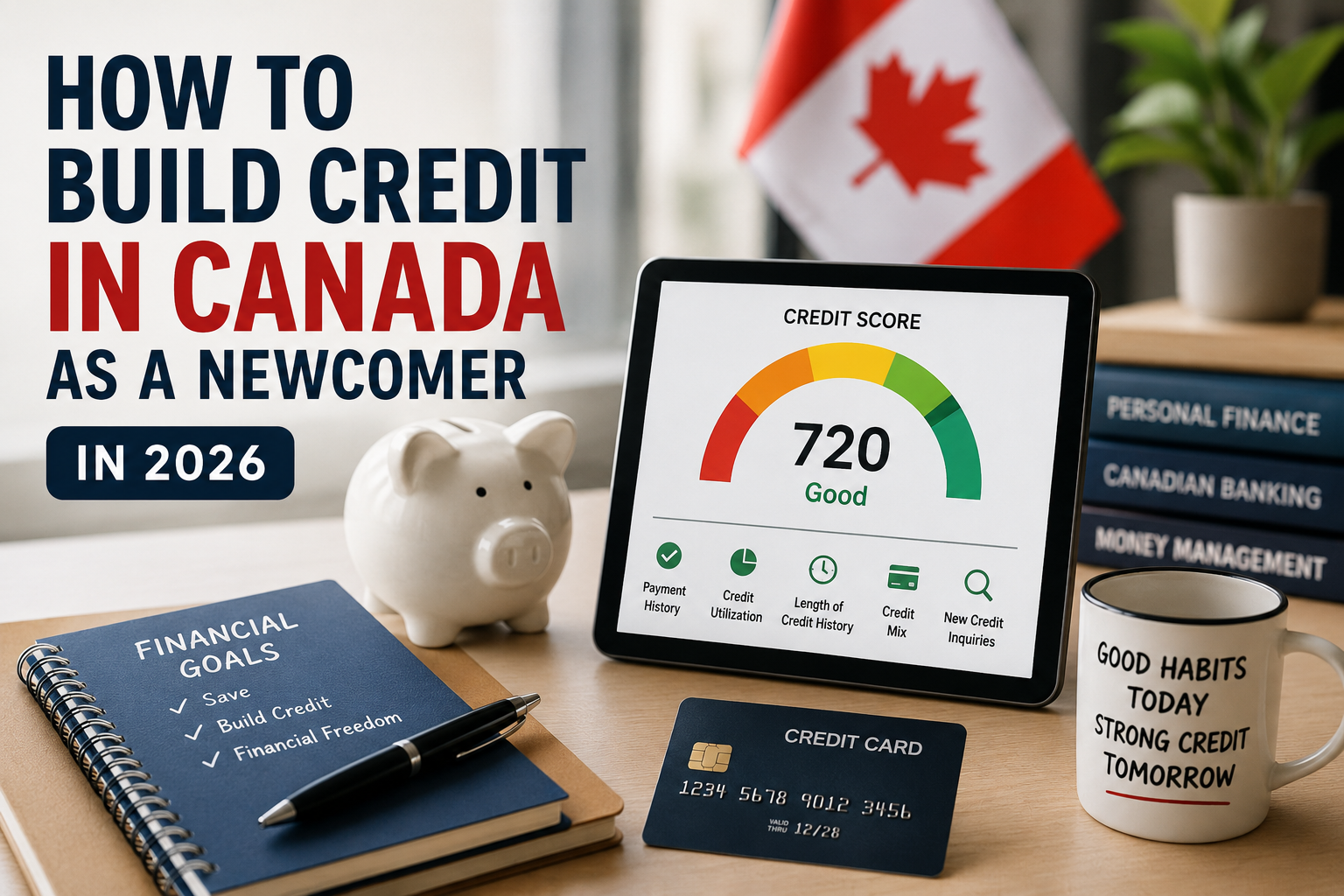
Building a credit history is an important part of establishing your financial life in Canada.
Your Canadian credit history can influence your ability to qualify for credit cards, loans and other financial products. Some landlords, lenders and service providers may also use credit information when evaluating applications.
For newcomers, the challenge is simple: you may have years of financial history in another country but little or no Canadian credit history.
The good news is that credit can be built gradually. Understanding how Canada's credit system works and developing responsible habits from the beginning can help you establish a stronger financial profile over time.
Important: There is no guaranteed way to achieve a particular credit score within a specific period. Credit decisions and scoring models vary, so be cautious of anyone promising an instant credit-score increase.
What Is a Credit Score in Canada?
A credit score is a number calculated using information contained in your credit report.
According to the Financial Consumer Agency of Canada, credit scores generally range from 300 to 900. Higher scores generally indicate stronger creditworthiness to lenders.
Canada has two major credit bureaus: Equifax and TransUnion. They collect information from lenders and other organizations and use that information to maintain consumer credit reports.
Why Newcomers May Start With Little Canadian Credit History
When you arrive in Canada, you may not yet have a substantial Canadian credit file.
Your financial history from another country does not necessarily transfer directly into Canada's credit-reporting system.
This can create a frustrating situation: lenders may want to see Canadian credit history, but you need access to credit in order to begin establishing that history.
Fortunately, there are several practical ways to get started.
1. Get a Canadian Credit Card
Using a credit card responsibly is one common way to begin establishing Canadian credit history.
Some Canadian financial institutions offer credit cards specifically designed for eligible newcomers who have limited or no Canadian credit history.
Approval requirements vary by institution and product, so a newcomer banking program does not guarantee that every applicant will receive a credit card.
If approved, use the card carefully rather than treating the available credit limit as additional income.
2. Consider a Secured Credit Card
If you cannot qualify for a traditional unsecured credit card, a secured credit card may be another option.
A secured card generally requires you to provide a security deposit to the issuer. The card can then be used similarly to a regular credit card.
Before applying, confirm that the issuer reports account activity to Canada's credit bureaus and carefully review all fees and conditions.
3. Pay Your Bills on Time
Payment history is one of the most important elements of your credit profile.
The Financial Consumer Agency of Canada recommends making payments on time and states that payment history is the most important factor for your credit score.
At minimum, make the required payment by the due date. Whenever possible, paying your credit-card balance in full can also help you avoid interest charges on purchases when the applicable grace-period conditions are met.
Setting up automatic payments or calendar reminders can reduce the chance of accidentally missing a due date.
4. Keep Your Credit Utilization Low
Your credit utilization is the amount of available revolving credit you are using.
For example, if your credit-card limit is C$2,000 and your balance is C$500, you are using 25% of that available credit.
The Financial Consumer Agency of Canada recommends trying to use less than 30% of your available credit.
Using a large percentage of your available credit may be viewed negatively even if you pay the balance by the due date.
5. Do Not Apply for Too Much Credit at Once
Applying for several credit products within a short period can result in multiple hard credit inquiries.
The Financial Consumer Agency of Canada notes that too many credit checks can make lenders think you are urgently seeking credit.
Apply selectively for financial products that actually fit your needs rather than submitting applications simply to see whether you will be approved.
6. Keep Older Credit Accounts When They Still Make Sense
The age of your credit accounts can influence your credit history.
FCAC recommends considering keeping an older account open and using it occasionally, particularly if there is no fee and the account continues to suit your needs.
That does not mean you should keep an expensive or unsuitable financial product forever solely because it is old. Fees and other costs still matter.
7. Check Your Credit Report
Checking your credit report allows you to see what information lenders and credit bureaus have recorded about you.
Canada's two major credit bureaus, Equifax and TransUnion, provide ways for consumers to access their credit information.
Review your report periodically for accounts you do not recognize, incorrect personal information, inaccurate payment information or other potential errors.
Does Checking Your Own Credit Score Hurt It?
No. Requesting your own credit report or score is generally considered a soft inquiry and does not affect your credit score.
This is different from certain lender credit checks performed when you apply for new credit, which may be recorded as hard inquiries.
How Long Does It Take to Build Credit in Canada?
There is no universal timeline for reaching a particular credit score.
Your credit profile develops as information is reported over time, and different lenders use credit information differently when evaluating applications.
Rather than trying to reach a specific score as quickly as possible, focus on consistently paying obligations on time, maintaining manageable balances and applying for credit responsibly.
Credit building should be viewed as a long-term financial habit rather than a short-term trick.
What Is Considered a Good Credit Score in Canada?
Canadian credit scores generally range from 300 to 900, but there is no single score that guarantees approval for a financial product.
Each lender establishes its own lending criteria and may consider factors beyond your credit score, including income, existing debt and the type of credit being requested.
A higher score can generally make you appear less risky to lenders, but approval is never guaranteed solely because of a particular number.
Can Paying Rent Build Credit in Canada?
Rent payments do not automatically appear on every Canadian credit report.
However, some services and programs may allow eligible rental-payment information to be reported to credit bureaus.
Before paying for any rent-reporting service, understand which credit bureau receives the information, what fees apply and whether the service is appropriate for your situation.
Does Your Debit Card Build Credit?
Generally, using a debit card does not build credit history because you are spending money directly from your bank account rather than borrowing money.
This is one reason opening a chequing account and building credit should be viewed as related but separate parts of establishing your finances in Canada.
Does Your Income Determine Your Credit Score?
Your salary itself is not part of the information used to calculate your credit score.
However, lenders may separately consider your income and employment when deciding whether to approve a loan or credit product and how much credit to offer.
Having a high income therefore does not automatically mean having a high credit score.
Credit Card Mistakes Newcomers Should Avoid
A credit card can help establish credit history, but poor management can also create expensive debt.
Common mistakes to avoid include:
- Missing payment due dates
- Regularly using most or all of your available credit
- Applying for several cards within a short period
- Using cash advances without understanding the costs
- Paying only the minimum while carrying a large balance for long periods
- Ignoring annual fees and other account charges
- Treating your credit limit as money you can afford to spend
Watch Out for Credit Repair Scams
Be cautious of companies promising to quickly erase accurate negative information or guarantee a dramatic increase in your credit score.
Accurate negative information generally remains on a credit report for a period determined by the type of information and provincial or territorial rules.
If you find inaccurate information on your credit report, you have the right to dispute it with the credit bureau.
You do not need to pay a company simply to dispute information you believe is incorrect.
A Simple Credit-Building Plan for Newcomers
If you are starting with little Canadian credit history, your strategy does not need to be complicated.
- Open an appropriate Canadian bank account.
- Research a newcomer or secured credit card that fits your situation.
- Use the card for purchases you can afford.
- Pay your bills on time.
- Try to keep your credit utilization below 30%.
- Avoid unnecessary credit applications.
- Check your credit reports for errors.
- Repeat these responsible habits consistently over time.
Why Credit Matters Beyond Credit Cards
Establishing a healthy credit history can become increasingly important as your financial life in Canada develops.
Lenders may review your credit when you apply for products such as personal loans, vehicle financing, lines of credit and mortgages.
Credit information may therefore affect both your access to borrowing and the financial options available to you.
This makes responsible credit management useful even if you do not plan to carry credit-card debt.
The Bottom Line
Newcomers do not need complicated tricks to start building credit in Canada.
Begin with an appropriate credit product, make payments on time, keep balances manageable, limit unnecessary applications and periodically review your credit report.
Most importantly, give the process time. A strong Canadian credit history is built through consistent financial behaviour rather than shortcuts.
Once you establish these habits, you will be better prepared to evaluate future financial decisions involving credit cards, loans, vehicle financing and eventually a mortgage.
Canada Worth Today Checklist: Your First 12 Months of Canadian Credit
| Stage | What to do | Why it matters |
|---|---|---|
| Month 1 | Open a chequing account and, where offered, a newcomer credit card or a secured card | A credit file only starts once a reporting lender opens an account in your name |
| Months 1-3 | Set one small recurring bill on the card and pay the statement balance in full, automatically | Payment history is the single largest factor in a Canadian credit score |
| Months 3-6 | Keep your reported balance well below your limit; do not treat the limit as a spending target | Credit utilisation is scored separately from whether you pay on time |
| Month 6 | Pull your free credit report from both Equifax Canada and TransUnion Canada and check it for errors | Newcomer files are frequently incomplete or merged incorrectly |
| Months 6-12 | Avoid opening several new accounts at once; add a second product only if you need it | Multiple hard inquiries in a short period can lower a young file |
| Month 12 | Ask about graduating a secured card to an unsecured one and recovering your deposit | Keeping the same account open preserves your credit history length |
Common Mistakes and Red Flags
- Assuming credit history transfers. A strong score in another country generally does not move to Canada; some banks will consider a foreign credit reference for a product application, but it does not create a Canadian file.
- Paying only the minimum. It keeps the account in good standing but leaves interest running and a high reported balance.
- Closing your oldest card. Length of history is part of the score.
- Paying a company to "repair" or "boost" your credit. Nothing a paid service can legally do is unavailable to you for free through the credit bureaus and the Financial Consumer Agency of Canada.
- Anyone guaranteeing a score, or asking for payment to "register" you with a bureau. Treat this as a scam.