Getting a Canadian phone number is one of the most useful things to do soon after arriving in Canada. You may need it when applying for jobs, opening accounts, communicating with landlords, setting up services and receiving verification codes.
But choosing your first Canadian cell phone plan can be confusing. Newcomers may encounter prepaid and postpaid service, credit checks, device financing, activation costs, data limits and promotional prices that do not necessarily last forever.
The good news is that having little or no Canadian credit history does not mean you cannot get mobile service. Prepaid options can provide an immediate alternative, while eligibility requirements for postpaid service vary by provider.
This guide explains how Canadian cell phone plans work in 2026, what newcomers may be asked to provide and what to compare before signing up.
How cell phone plans work in Canada
Canadian wireless plans generally combine some or all of the following:
- mobile data;
- voice calling;
- text messaging;
- voicemail and other features;
- Canadian or international calling options;
- roaming options; and
- in some cases, financing or another arrangement for a mobile device.
You can bring your own compatible phone or obtain a device through a wireless provider.
Before comparing advertised prices, determine what you actually need. Someone who spends most of the day on Wi-Fi may need far less mobile data than a newcomer who uses their phone for navigation, video calls, job searching and hotspot access.
Prepaid vs. postpaid cell phone plans
One of the first decisions is whether to use prepaid or postpaid service.
| Feature | Prepaid | Postpaid |
|---|---|---|
| When you pay | Before using the service | Generally billed after service is used |
| Monthly bill | Typically funded or topped up in advance | Normally issued after the billing period |
| Credit requirements | Can be easier for people without Canadian credit history | A provider may require a credit check or other eligibility requirements |
| Good for | New arrivals seeking a simple way to start service | Customers who qualify and prefer ongoing monthly billing |
| Possible extra charges | Usage is generally limited by the prepaid balance and plan conditions | Depending on the plan, additional or pay-per-use charges can occur |
The CRTC defines prepaid service as wireless service purchased in advance of use. Postpaid service may be billed partly or entirely after use and can allow charges beyond the included service.
Is prepaid a good option for newcomers?
It can be.
A newcomer may arrive without an established Canadian credit file, permanent employment or many of the documents commonly accumulated after living in Canada for several months.
Prepaid service can reduce some of those barriers because you pay for service in advance.
It can be particularly useful during your first weeks while you establish other parts of your life in Canada.
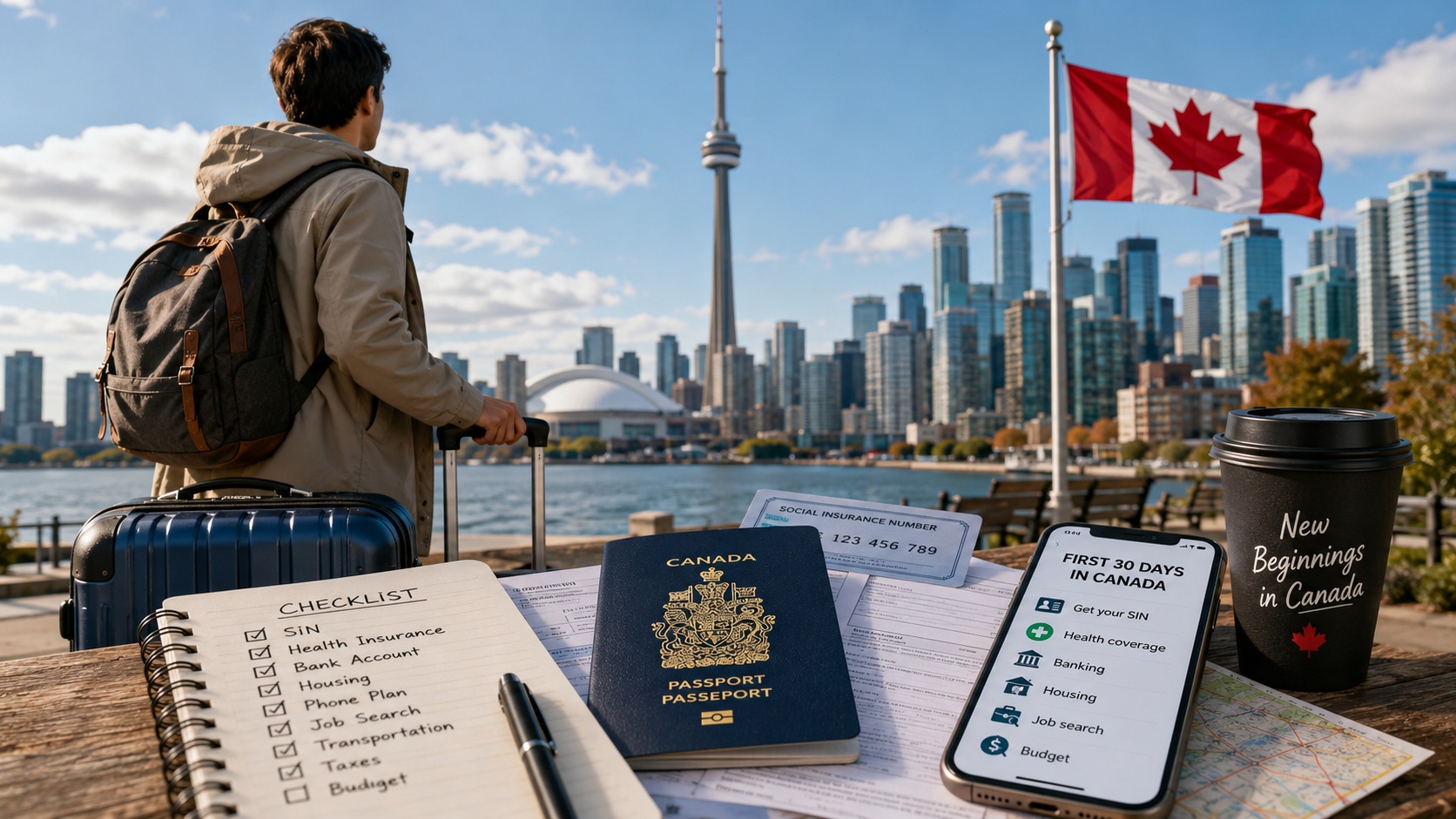
If you are organizing your initial settlement tasks, our First 30 Days in Canada Newcomer Checklist covers other priorities after arrival.
What is a postpaid phone plan?
With postpaid service, you generally receive a bill showing the charges accumulated during the billing period.
Postpaid plans can be attractive because they may offer different data packages, family or shared options, promotional features and ways to obtain a new device.
However, a provider may want to verify your identity and assess eligibility before opening the account.
For a newcomer without established Canadian credit, that can sometimes mean a credit check, additional documentation, a deposit or being offered a different type of service. Requirements vary by provider and situation.
Do newcomers need a Canadian credit score to get a phone plan?
Not necessarily.
Immigration, Refugees and Citizenship Canada (IRCC) explains that when signing up for home or mobile service, you might be asked to agree to a credit check or provide proof of employment.
IRCC specifically advises newcomers who do not yet have a credit history or job to explain that they are new immigrants and ask what options are available.
This is an important distinction: having no Canadian credit history does not automatically mean having no access to mobile service.
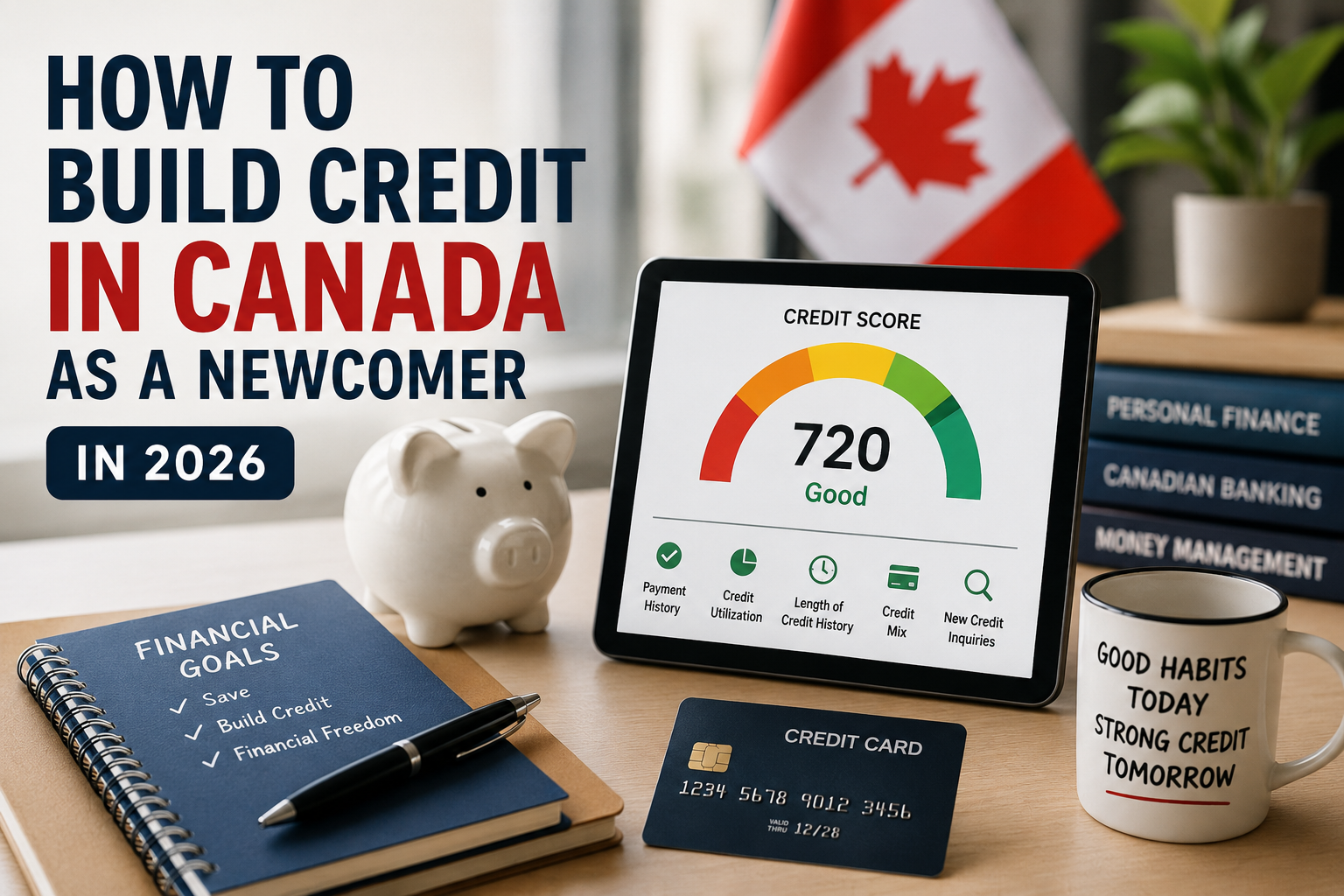
If building your Canadian credit profile is one of your priorities, see our guide on how to build credit in Canada as a newcomer.
What documents might you need?
According to IRCC's newcomer guidance, people signing up for a home or mobile plan will generally need to provide two pieces of identification of their choice.
Examples can include:
- a passport;
- a permanent resident card;
- a driver's licence; or
- other identification accepted by the provider.
A provider may also request authorization for a credit check or proof of employment, depending on the service being requested.
Because providers set their own account-verification procedures within applicable Canadian law and regulation, check the exact requirements before visiting a store.
Do you need a SIN to get a cell phone plan?
A Social Insurance Number is an important number used for employment, taxes and certain government programs, but newcomers should be careful about sharing it unnecessarily.
The Government of Canada's newcomer communications guidance discusses identification, credit checks and proof of employment when obtaining communications services; it does not say that every newcomer must provide a SIN to obtain mobile service.
If a company requests your SIN, ask why it is needed, how it will be used and whether another form of identification can be provided instead.
For information about obtaining and protecting your SIN, read our How to Get a SIN in Canada in 2026 guide.
Bring your own phone or get a new one?
Newcomers who already own a modern unlocked phone may be able to use it with a Canadian SIM or eSIM, provided the device is compatible with the provider's network.
Bringing your own device can simplify your initial setup because you only need wireless service rather than both service and a new phone.
Before signing up, verify:
- that your phone is unlocked;
- that it supports the necessary Canadian network technologies and frequencies;
- that the provider supports your specific device;
- whether physical SIM or eSIM is available; and
- whether all desired features will work on that network.
Are phones sold by Canadian providers unlocked?
Newly purchased mobile devices from Canadian wireless providers must be provided unlocked.
The CRTC's Wireless Code also provides protections related to unlocking older devices associated with wireless service providers.
An unlocked phone gives consumers more flexibility because a compatible device can potentially be used when switching providers.
What is an eSIM?
An eSIM is a digital SIM that can activate mobile service without inserting a traditional physical SIM card.
Whether you can use one depends on both your device and the wireless provider.
For some newcomers, eSIM can make setup convenient, especially when using a compatible phone already purchased outside Canada.
However, do not assume every device or plan supports eSIM. Confirm compatibility before purchasing service.
Should you get your Canadian number immediately after arriving?
For many newcomers, yes.
A local phone number can make everyday settlement easier. You may use it for:
- job applications;
- interviews and employer calls;
- bank verification;
- landlord communication;
- delivery services;
- government or service appointments;
- two-factor authentication; and
- emergency contact information.
You do not necessarily need to commit immediately to an expensive long-term arrangement. A prepaid or bring-your-own-device option can give you time to compare alternatives after you settle.
How much data do you actually need?
There is no single correct amount.
Your data needs depend on how you use your phone.
| Usage pattern | What can increase data use |
|---|---|
| Light | Messaging, email, occasional maps and extensive Wi-Fi use |
| Moderate | Regular social media, navigation, music and browsing |
| Heavy | Frequent video streaming, video calls, hotspot use and limited access to Wi-Fi |
These categories are illustrative rather than fixed data recommendations. Apps, streaming quality and personal habits can make usage vary substantially.
Instead of buying the largest plan automatically, monitor your actual usage during your first month and adjust if necessary.
What should you compare besides the advertised monthly price?
A cheap headline price does not always mean the lowest total cost.
Before signing up, compare:
- regular monthly price;
- how long promotional pricing lasts;
- included mobile data;
- data speeds and any speed restrictions;
- Canada-wide calling and texting;
- international calling rates;
- roaming costs;
- activation or setup charges, if applicable;
- SIM or eSIM charges, if applicable;
- device payments;
- coverage where you live and work;
- automatic payment requirements;
- cancellation terms; and
- taxes.
Always ask when a promotional price ends
Promotional pricing can make one plan look substantially cheaper than another.
Before accepting an offer, determine:
- the regular price;
- the promotional price;
- how long the discount lasts;
- whether automatic payments are required;
- whether the discount depends on bundling other services; and
- what the bill is expected to become after the promotion ends.
This is particularly important for newcomers building a monthly budget.
Check coverage, not just data
A large data allowance is not very useful if service is weak in the places where you spend most of your time.
Check the provider's current coverage map for:
- your home;
- your workplace or school;
- your regular commute;
- areas you frequently visit; and
- rural areas if you travel outside major cities.
Coverage maps are useful planning tools, but actual indoor and outdoor performance can vary because of buildings, terrain, network conditions and the device being used.
How does the Wireless Code protect you?
Canada's CRTC created the Wireless Code to establish consumer protections for retail mobile wireless services.
Among other things, the Code addresses:
- clear contracts;
- critical information about service agreements;
- data and roaming charges;
- device unlocking;
- trial periods in applicable situations;
- contract cancellation;
- prepaid balances; and
- complaint procedures.
The protections that apply can differ depending on whether the service is prepaid or postpaid.
Do you have a trial period?
When a wireless contract is subject to an early cancellation fee, the Wireless Code requires a minimum trial period of 15 calendar days.
During that period, customers can cancel without penalty or an early cancellation fee if they remain within the applicable usage limits and return any provided device in near-new condition, including its original packaging.
For a single-user plan with usage limits, the standard trial-period allowance must be at least half of the monthly usage included in the contract.
A customer who self-identifies as a person with a disability is entitled to an extended trial period of at least 30 calendar days and higher permitted usage under the Wireless Code.
Can you cancel a wireless contract?
The Wireless Code allows customers to cancel by notifying their provider, and cancellation takes effect when the provider receives the notice.
Whether an early cancellation fee applies depends on the type of agreement and whether a subsidized or financed device is involved.
Do not assume that cancelling the wireless service automatically eliminates money still legitimately owed for a device.
Read the Critical Information Summary and contract before agreeing to a device arrangement.
What is the Critical Information Summary?
For applicable postpaid contracts, the Wireless Code requires providers to give customers a Critical Information Summary containing important information about the agreement.
It is designed to clearly summarize important terms such as:
- the services included;
- minimum monthly charges;
- one-time costs;
- trial-period information;
- device-related amounts where applicable; and
- other important contract conditions.
Keep a copy of your contract and Critical Information Summary. They can be useful if the bill later differs from what you understood when signing up.
What about data overage charges?
Postpaid plans can potentially generate additional charges when usage exceeds what is included in the plan.
The Wireless Code contains protections designed to limit bill shock from data overage and roaming charges and regulates who can authorize charges beyond established limits.
Still, the simplest approach is to understand your plan before using large amounts of mobile data.
Enable usage notifications on your device and through your provider's account tools when available.
Be careful with international roaming
Using a Canadian phone outside Canada can be expensive depending on your plan.
Before travelling, check:
- daily roaming charges;
- included destinations;
- pay-per-use rates;
- travel packages;
- whether Wi-Fi calling affects your situation; and
- whether using a local SIM or eSIM is practical.
The Wireless Code requires providers to notify customers when their device is roaming internationally and provide information about applicable voice, text and data rates.
Can you keep your phone number when switching providers?
In many circumstances, Canadian consumers can transfer an existing telephone number when changing service providers, provided the number and service meet portability requirements.
If keeping your number is important, do not cancel the old service before confirming the transfer process with the new provider.
Ask the new provider what information is required to authorize the transfer.
Should newcomers finance an expensive phone immediately?
Not necessarily.
A new flagship smartphone can turn a relatively simple wireless expense into a much larger monthly commitment.
Before financing a device, separate the costs in your mind:
- wireless service cost;
- device cost;
- taxes;
- optional protection or insurance; and
- any amount that could become payable if you leave the arrangement early.
If your current phone works in Canada, bringing your own device may make it easier to understand your actual communications cost before purchasing another phone.
How a phone plan fits into your Canadian budget
Mobile service is only one recurring expense newcomers need to consider.
Housing, groceries, transportation, utilities and insurance will usually represent much larger parts of a household budget.
Our Utilities Cost in Canada 2026 guide explains how phone and internet costs fit alongside electricity and heating expenses.
For a broader settlement budget, see How Much Money Do You Need to Live in Canada in 2026?.
Do you need a Canadian bank account first?
Not every mobile option has identical payment requirements.
Depending on the provider and plan, payment methods can include credit cards, debit arrangements, online banking or prepaid top-ups.
Having a Canadian bank account can make recurring payments easier as you establish yourself.
If you are still setting up your finances, read our guide to the best bank accounts for newcomers in Canada.
Newcomer cell phone plan checklist
| Step | What to check |
|---|---|
| 1 | Check whether your existing phone is unlocked and compatible in Canada. |
| 2 | Decide whether prepaid or postpaid service better suits your situation. |
| 3 | Prepare acceptable identification. |
| 4 | Ask whether a credit check, deposit or proof of employment applies. |
| 5 | Compare coverage where you actually live and work. |
| 6 | Estimate how much mobile data you realistically need. |
| 7 | Check the regular price after any promotion ends. |
| 8 | Identify one-time, activation, SIM and device costs. |
| 9 | Read the contract and Critical Information Summary where applicable. |
| 10 | Understand trial, cancellation, roaming and overage rules before using the service. |
Common mistakes newcomers should avoid
- Choosing a plan based only on the promotional price.
- Buying far more mobile data than you actually need.
- Ignoring network coverage in your neighbourhood or workplace.
- Financing an expensive phone without understanding the total device obligation.
- Assuming no Canadian credit history means you cannot get any mobile service.
- Sharing sensitive identification without understanding why it is requested.
- Ignoring roaming rates before travelling.
- Discarding the contract or Critical Information Summary.
- Cancelling an old number before completing a requested number transfer.
- Assuming prepaid and postpaid services have identical rules.
What if you have a problem with your provider?
Start by contacting the wireless provider and giving it an opportunity to resolve the issue.
If the problem remains unresolved, the CRTC directs consumers to the Commission for Complaints for Telecom-television Services (CCTS) for eligible telecommunications complaints.
Keep copies of bills, contracts, emails, chat transcripts and other records that may help explain what happened.
Bottom line
Getting a cell phone plan in Canada does not need to be complicated, even if you have just arrived and have no established Canadian credit history.
For some newcomers, using an unlocked phone with prepaid service can provide a straightforward way to obtain a Canadian number while settling in. Others may qualify immediately for a postpaid plan that better matches their needs.
The most important step is to compare the complete offer rather than the headline price. Look at coverage, data, regular pricing, promotional conditions, device costs, credit requirements, roaming and cancellation terms.
A Canadian phone number can quickly become an important part of your newcomer setup, so choose a service that fits your real usage and budget rather than paying for features you do not need.
Important: Wireless plans, prices, promotions, eligibility requirements and provider policies can change frequently. This guide provides general information based on Canadian government and CRTC guidance available in 2026. Verify current prices and requirements directly with the provider before signing up.