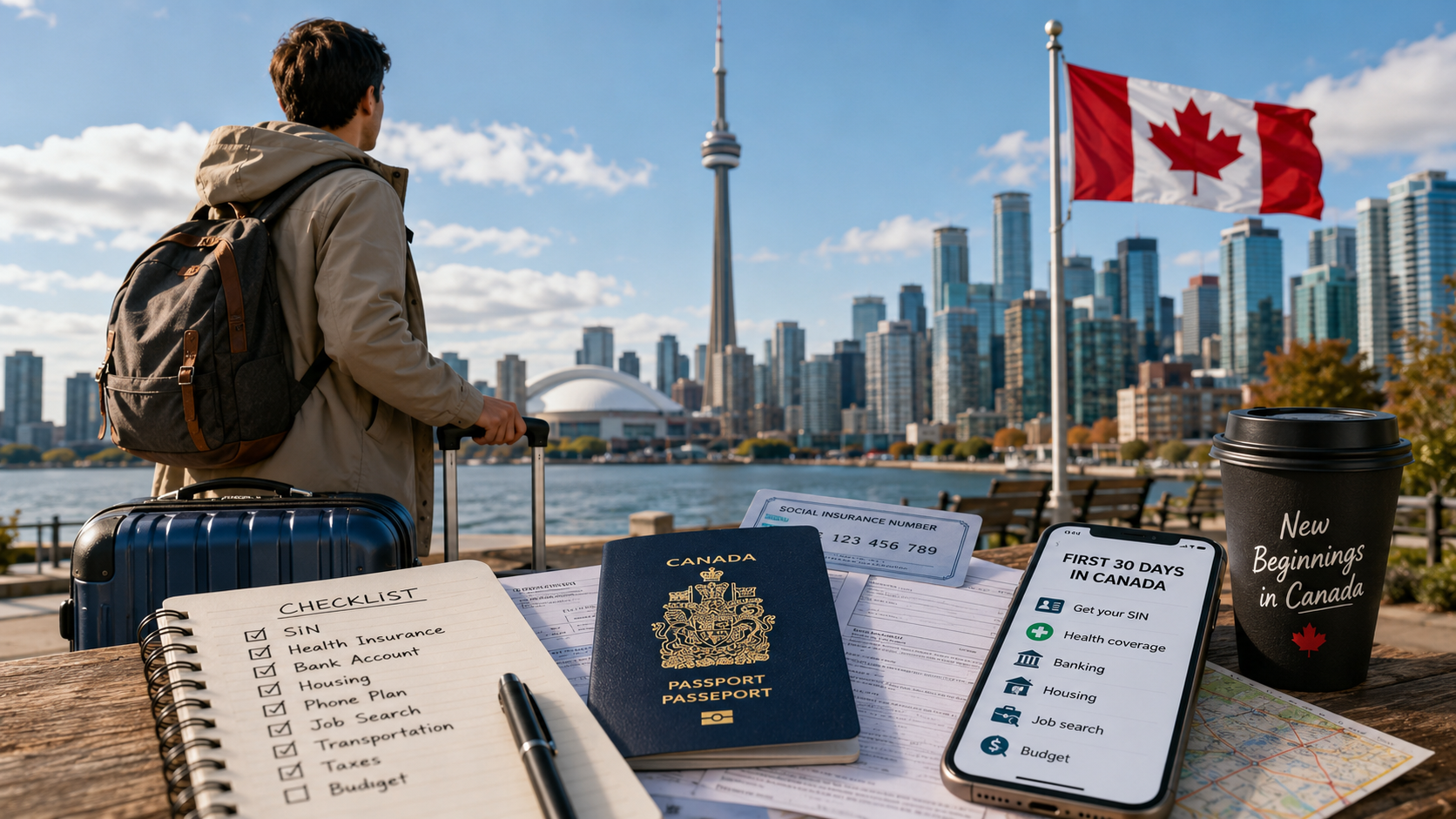
Starting a new life in Canada involves much more than unpacking your bags. During your first few weeks, you may need to organize government documents, banking, health coverage, housing, transportation and your job search — often at the same time.
The process becomes much easier when you know what deserves attention first. This 2026 newcomer checklist organizes the most important tasks for your first 30 days in Canada and points you toward official resources when rules or eligibility requirements are involved.
Not every step applies to everyone. Your immigration status and the province or territory where you live can change what you need to do and when you need to do it.
1. Apply for Your Social Insurance Number (SIN)
If you are authorized to work in Canada, getting your Social Insurance Number should be one of your first priorities.
The SIN is a nine-digit number used to work in Canada and access certain government programs and benefits. Temporary SINs issued to eligible temporary residents begin with the number 9 and have an expiry date linked to the immigration document authorizing the stay.
You can find current application requirements directly through Service Canada.
Keep your SIN private. You should not provide it simply because a landlord, company or unknown person asks for it.
2. Check Your Provincial or Territorial Health Coverage
Canada has a publicly funded healthcare system, but each province and territory operates its own health insurance plan.
This means that eligibility, covered services and registration procedures can differ depending on where you settle.
Once you know where you will be living, check your provincial or territorial government's requirements and apply for coverage if you are eligible.
The Government of Canada provides an overview of the system and links to provincial and territorial resources on its healthcare information page for newcomers.
Do not assume that a rule you heard about Ontario automatically applies in Alberta, British Columbia, Quebec or another province.
3. Open a Canadian Bank Account
A local bank account makes many everyday tasks easier after arriving in Canada.
You may use it to receive your salary, pay bills, send e-Transfers, use a debit card and set up automatic payments.
When comparing accounts, look beyond the introductory promotion. Consider:
- Monthly account fees
- Transaction limits
- ATM availability
- e-Transfer fees or limits
- Minimum balance requirements
- Newcomer offers
- What happens when the promotional period ends
Canada Worth also has a dedicated guide to bank accounts for newcomers to Canada that explains this topic in greater detail.
4. Find Housing That Fits Your Real Budget
Rent will probably be one of your largest monthly expenses, but the advertised rent is not always your complete housing cost.
Before signing a lease, determine whether you will also be responsible for expenses such as:
- Electricity
- Heating
- Water
- Internet
- Parking
- Laundry
- Tenant insurance
Landlord and tenant rules are provincial or territorial, so always check the rules where you actually live.
For a deeper explanation, read our guide to renting in Canada as a newcomer.
5. Get a Reliable Canadian Phone Number
A Canadian phone number quickly becomes useful when dealing with employers, landlords, banks and other services.
Before committing to an expensive mobile plan, compare the total monthly cost rather than focusing only on the advertised price.
Check the amount of data included, coverage in your area, activation charges, contract conditions and whether you are financing a device.
If you already own an unlocked smartphone, a lower-cost bring-your-own-device plan may help reduce your expenses during the first few months.
6. Understand Transportation Before Buying a Car
One of your early financial decisions may be whether you actually need a vehicle.
In cities with extensive public transportation, living near a major transit route may allow you to postpone purchasing a car.
Compare the cost and travel time of public transit with the full cost of vehicle ownership.
A car can involve much more than the purchase or financing payment. You may also have to budget for insurance, fuel, registration, maintenance, winter tires and parking.
If purchasing a vehicle is part of your plan, our guide to car insurance in Canada for newcomers explains another major expense you should consider.
7. Organize Your Job Search
If you are legally authorized to work in Canada and need employment, start organizing your search as early as possible.
Create a clear résumé focused on the experience and skills relevant to the position you want.
Your first job-search checklist might include:
- Preparing your résumé
- Updating your LinkedIn profile
- Creating job alerts
- Researching employers
- Practising interviews
- Checking whether your occupation requires licensing
- Using newcomer employment services when eligible
The Government of Canada's Job Bank provides job listings as well as labour-market and career information.
Never assume that someone can guarantee you a legitimate Canadian job simply because you pay them a fee.
8. Start Building Your Canadian Credit History Carefully
Newcomers may arrive without an established Canadian credit history.
Building credit can become important because your credit information may later affect access to financial products and borrowing.
Responsible credit use does not mean carrying a balance or paying unnecessary interest. Paying bills on time and managing available credit carefully are fundamental habits.
The Financial Consumer Agency of Canada provides official information about Canadian credit reports and credit scores.
You can also read our complete guide on how to build credit in Canada as a newcomer.
9. Learn the Basics of Canadian Taxes
Taxes may not feel urgent during your first week, but understanding the basics early can prevent confusion later.
The Canada Revenue Agency considers someone a newcomer for the first year that person is a resident of Canada for income tax purposes.
If you become a Canadian resident for tax purposes during 2026, your first tax obligations will depend on your individual circumstances. Keep employment, income and other relevant financial records organized from the beginning.
For current information, consult the CRA's official tax information for newcomers to Canada.
People with foreign income, investments, businesses or significant assets outside Canada may want professional tax advice based on their circumstances.
10. Check Whether You May Qualify for Benefits and Credits
Newcomers should not automatically assume that they must wait until after filing their first Canadian tax return before checking government benefits.
Depending on your circumstances and eligibility, certain benefit and credit payments may be available after you become a resident.
One important 2026 change is the Canada Groceries and Essentials Benefit (CGEB), which replaced the former GST/HST credit in July 2026. Eligible new residents may be able to apply before filing their first Canadian tax return.
Eligibility varies, so check the Canada Revenue Agency's newcomer information rather than relying on social media posts or unofficial claims.
11. Find Free Newcomer Settlement Services
One of the most useful resources available to some newcomers is also one of the easiest to overlook.
Government-funded settlement organizations can help eligible newcomers with areas such as finding work, understanding housing, improving English or French and adjusting to their communities.
Eligibility depends on immigration status and other conditions.
There was also an important change in 2026: beginning April 1, economic-class permanent residents can access federally funded newcomer services only for a limited eligibility period.
You can check your eligibility and find newcomer services near you through IRCC.
12. Create a First-Month Budget
Your first month in Canada can be considerably more expensive than an ordinary month.
New arrivals may face several one-time or temporary expenses:
- Temporary accommodation
- Rental-related upfront costs where permitted
- Furniture and household items
- Phone setup
- Transportation
- Appropriate clothing
- Groceries and basic supplies
Separate these initial expenses from the recurring costs you expect to pay every month.
Maintaining an emergency buffer can be particularly valuable while you are still looking for permanent housing or employment.
13. Keep Important Documents Organized
Create a secure system for your important records as soon as possible.
Depending on your situation, these may include:
- Passport
- Immigration documents
- Permanent resident documents
- Work or study permit
- SIN confirmation
- Health coverage documents
- Lease
- Employment records
- Banking documents
- Tax records
Digital backups can be useful, but highly sensitive documents should be stored securely. Be cautious when someone asks you to send copies of identification or financial information electronically.
14. Learn Which Rules Are Provincial
A common newcomer mistake is treating every Canadian rule as a federal rule.
Many important parts of everyday life are governed provincially, territorially or locally.
These can include:
- Health coverage
- Tenant rights
- Employment standards
- Minimum wage
- Driver licensing
- Vehicle registration
- Education
- Sales taxes
Advice that applies to someone living in Toronto may therefore be different from advice for someone living in Vancouver, Calgary, Montreal or Halifax.
When a decision involves a legal requirement or eligibility rule, check the official government source responsible for your location.
15. A Simple First 30 Days Checklist
You do not need to complete everything immediately. A simple schedule can make the transition easier.
During Your First Few Days
- Secure accommodation
- Apply for your SIN if eligible and necessary
- Check health coverage eligibility
- Arrange reliable phone service
- Open a bank account
During Your First Two Weeks
- Prepare your résumé and job-search accounts
- Learn how local transportation works
- Continue searching for permanent housing if needed
- Learn the basics of Canadian credit
- Check newcomer services in your community
By the End of Your First Month
- Create a sustainable monthly budget
- Organize important documents
- Learn about your Canadian tax responsibilities
- Check possible benefits and credits
- Understand important provincial and local rules
- Begin planning your longer-term financial goals
Your priorities may be completely different if you arrive with a job and permanent housing already arranged. Treat this as a practical framework rather than a universal schedule.
Final Thoughts
Your first 30 days in Canada are about creating a foundation, not solving every part of your new life immediately.
Start with the essentials: your documents, health coverage, housing, banking, communication and income. Once those pieces are organized, you can focus more attention on building credit, managing your budget and planning your longer-term future.
Most importantly, verify important information through official sources whenever the subject involves immigration, taxes, healthcare, employment rights or government benefits. Canadian programs and eligibility requirements can change, and the correct answer often depends on your personal circumstances and where you live.