Car insurance is one of the first major expenses many newcomers encounter after buying a vehicle in Canada.
Understanding what coverage you need, how premiums are calculated and whether your previous driving experience can be recognized can make a major difference in what you pay.
The most important thing to know is that car insurance does not work exactly the same way across Canada. Coverage requirements, insurance systems and pricing rules vary by province and territory.
This guide explains how car insurance works for newcomers in 2026, what can affect your premium and practical ways to reduce your costs without sacrificing important protection.
Important: Automobile insurance rules and coverage vary by province, insurer and individual circumstances. Always verify current requirements with the appropriate provincial authority, insurer or licensed insurance professional.
Is Car Insurance Mandatory in Canada?
Yes. It is illegal to drive without automobile insurance in Canada.
If you own a vehicle, you must have the required insurance coverage before driving it on public roads.
If you regularly drive a vehicle owned by a family member or another person, you should also make sure you are properly listed or covered under that vehicle's insurance policy.
The exact minimum coverage required depends on the province or territory where the vehicle is registered.
How Car Insurance Works for Newcomers
When you apply for car insurance, the insurer evaluates different factors to estimate the likelihood and potential cost of a future claim.
Depending on the province and insurer, these factors may include:
- Your age
- Your location
- Your driving experience
- Your driving record
- The vehicle you drive
- How the vehicle is used
- Your annual mileage
- Your selected coverage
- Your deductible
- Other rating factors permitted by provincial rules
For newcomers, one particularly important issue is whether driving experience obtained outside Canada can be documented and recognized.
Can Foreign Driving Experience Help Lower Your Insurance?
Potentially, yes.
Newcomers with several years of driving experience outside Canada should not assume they must automatically start from zero.
Rules vary by province and insurer, but documented foreign driving experience may help establish your driving history.
British Columbia's ICBC, for example, says it can credit up to 15 years of non-B.C. driving experience when acceptable proof is provided.
Before leaving your previous country or jurisdiction, consider obtaining documents such as:
- A driver's abstract
- A letter of driving experience
- Licence-history documents
- Other official records requested by the provincial licensing authority or insurer
Requirements vary, so confirm which documents are accepted before relying on them.
What Types of Car Insurance Coverage Exist in Canada?
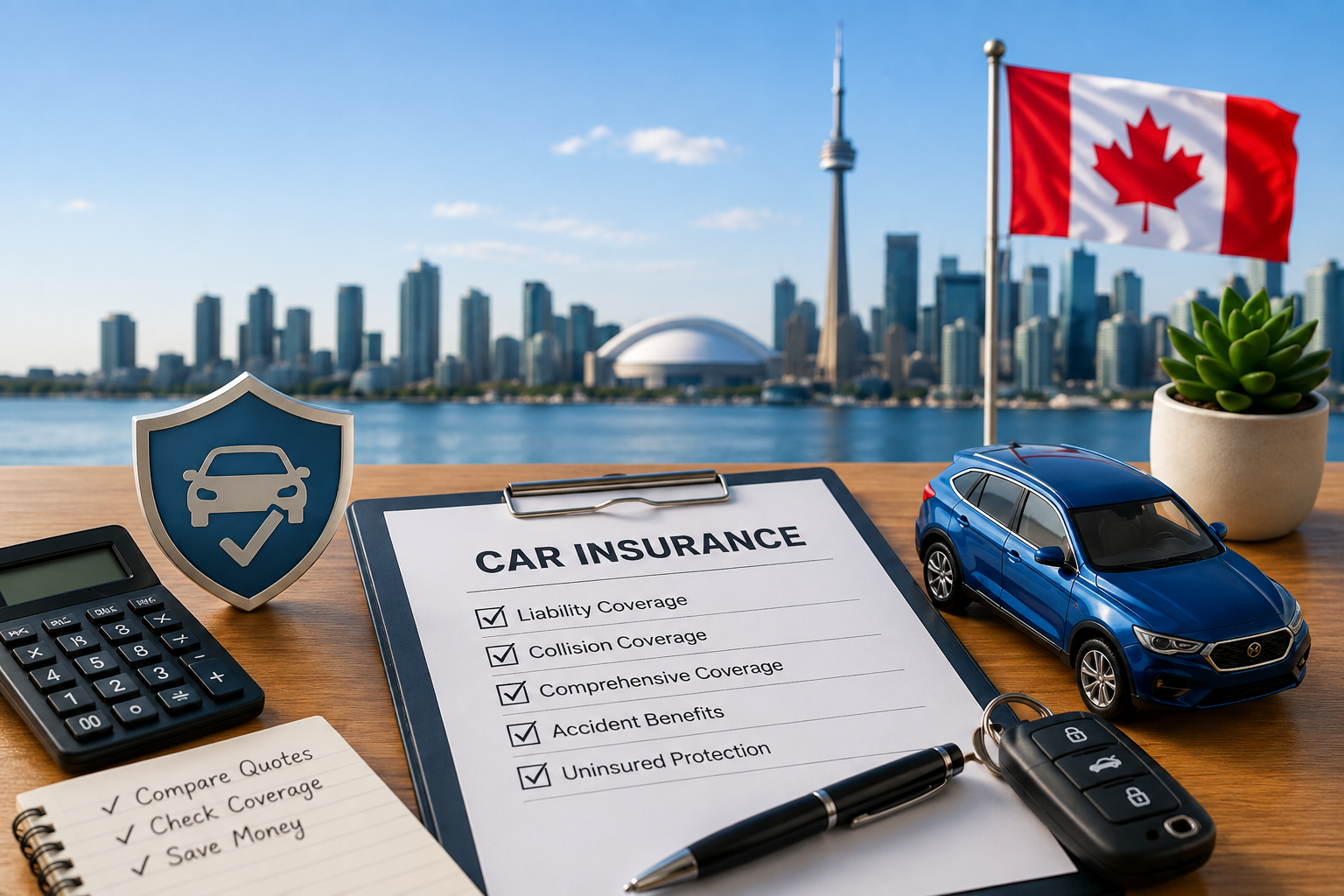
Canadian auto policies can contain several different types of protection.
The exact terminology and mandatory coverage differ by province, but these are some of the most common forms of coverage newcomers will encounter.
Third-Party Liability Coverage
Third-party liability insurance helps protect you financially if you are legally responsible for injuring another person or damaging someone else's property.
Minimum liability requirements vary by province.
Drivers can often purchase limits that are higher than the legal minimum.
Accident Benefits
Accident benefits can provide financial support for certain medical, rehabilitation, attendant-care or related expenses following a collision.
The specific benefits and whether they are mandatory or optional depend on the province and the policy.
Collision Coverage
Collision coverage generally helps pay for damage to your own vehicle resulting from a collision, subject to the terms, exclusions and deductible in your policy.
This type of coverage may be optional, although lenders or leasing companies may require it when the vehicle is financed or leased.
Comprehensive Coverage
Comprehensive insurance generally helps cover certain types of loss or damage that are not caused by a collision.
Depending on the policy, examples can include theft, vandalism, falling objects and some weather-related damage.
How Much Does Car Insurance Cost for Newcomers?
There is no single national price for newcomer car insurance in Canada.
Two people living in the same province can receive very different quotes based on their driving history, vehicle, neighbourhood, selected coverage and other rating factors.
For this reason, national averages can be misleading.
The most useful way to estimate your own cost is to obtain quotes based on your actual situation.
Why Newcomers May Receive Higher Insurance Quotes
A newcomer may arrive in Canada with many years of safe driving experience but have limited Canadian insurance history.
If previous experience cannot be verified or recognized, the insurer may have less information available when assessing the driver's risk.
This can affect the quote.
However, this does not mean every newcomer automatically pays more than every Canadian driver.
Your individual profile and the rules in your province matter.
How to Save Money on Car Insurance in Canada
There are several practical ways newcomers can look for a more competitive premium.
Compare Multiple Insurance Quotes
Do not automatically accept the first quote you receive.
Different insurers may price the same driver differently.
Compare several quotes and make sure you are comparing similar coverage limits, deductibles and optional protection.
Provide Proof of Previous Driving Experience
Ask the insurer what evidence it accepts from your previous country or jurisdiction.
If documented foreign driving experience can be recognized, providing the correct records may help the insurer evaluate your actual driving history more accurately.
Get Insurance Quotes Before Buying a Car
The vehicle you choose can affect your insurance premium.
Before purchasing a car, obtain insurance quotes for the models you are considering.
Two vehicles with similar purchase prices can potentially have different insurance costs.
Consider Your Deductible
A higher deductible can sometimes reduce your insurance premium.
However, it also means you may need to pay more out of pocket when making a covered claim.
Choose a deductible you could realistically afford if something happened.
Maintain a Clean Driving Record
Safe driving can affect your insurance costs over time.
Traffic convictions and at-fault collisions may increase premiums depending on the rules and rating system in your province.
Ask About Available Discounts
Some insurers offer discounts based on factors such as bundling multiple insurance policies, vehicle features or other eligibility criteria.
Discount availability varies, so ask the insurer or broker which discounts actually apply to your situation.
Public vs. Private Auto Insurance in Canada
Canada does not use one single auto-insurance system nationwide.
Some provinces operate public automobile insurance systems for certain mandatory coverage, while others rely primarily on private insurance companies.
British Columbia, for example, has basic automobile insurance through ICBC.
Ontario uses private insurance companies operating under provincial regulation.
This is another reason newcomers should research the rules in the province where they actually live rather than relying on general Canadian advice.
Important Ontario Auto Insurance Changes in 2026
Newcomers living in Ontario should pay particular attention to changes that took effect on July 1, 2026.
For policies entered into on or after that date, medical, rehabilitation and attendant-care benefits remain mandatory.
Several other accident benefits became optional, allowing consumers more flexibility to customize their coverage.
Optional benefits can include areas such as income replacement, caregiver benefits, housekeeping and home maintenance, depending on the policy and current Ontario rules.
This means two insurance quotes with similar prices may not necessarily provide the same protection.
Always compare the actual coverage included.
What Documents Should Newcomers Prepare?
Insurance companies and provincial authorities may request different documents depending on your circumstances.
Useful documents can include:
- Your Canadian driver's licence
- Your previous driver's licence
- A driver's abstract
- A letter showing previous driving experience
- Vehicle registration information
- Your Canadian address
- Information about other regular drivers of the vehicle
Contact the insurer or broker in advance to confirm exactly what documentation is required.
Should You Buy the Cheapest Car Insurance?
Not necessarily.
Price matters, especially when you are establishing yourself financially in Canada, but insurance exists to protect you against potentially significant financial losses.
A cheaper policy may have higher deductibles, lower limits or less optional protection.
Compare:
- Liability limits
- Deductibles
- Collision coverage
- Comprehensive coverage
- Accident benefits
- Optional endorsements
- Exclusions
- Total premium
The goal should be appropriate protection at a competitive price, not simply the lowest number on the quote.
Should Newcomers Use an Insurance Broker?
An insurance broker can help compare products available from insurers the broker represents or works with.
This may be useful for newcomers who are unfamiliar with Canadian insurance terminology.
However, not every broker works with every insurer.
You can also obtain quotes directly from insurance companies where available.
Comparing different channels may give you a broader view of your options.
Car Insurance and Your Canadian Budget
Insurance should be included in your transportation budget before you purchase a vehicle.
Vehicle ownership can involve much more than the monthly loan or lease payment.
Your budget may also need to include:
- Car insurance
- Fuel
- Registration and licensing
- Maintenance
- Repairs
- Parking
- Winter tires
- Financing costs
A vehicle that appears affordable based only on its purchase price may become much more expensive once all ownership costs are included.
Can Your Credit Score Affect Car Insurance?
Insurance-rating rules vary across Canada.
Whether credit information can be used for automobile insurance depends on provincial rules and insurer practices.
Do not assume your credit score will automatically affect your car-insurance rate simply because credit may be considered for other financial products.
Ask the insurer what factors are used in your province.
What Should You Do Before Buying Your First Car in Canada?
A simple approach can help newcomers avoid expensive surprises.
- Research provincial licensing requirements.
- Collect proof of previous driving experience.
- Choose several vehicles you are considering.
- Get insurance quotes before buying.
- Compare coverage, not just price.
- Calculate your total monthly transportation budget.
- Understand your deductible.
- Ask about discounts.
- Review the policy documents before purchasing coverage.
The Bottom Line
Car insurance is an unavoidable part of owning a vehicle in Canada, but newcomers can take steps to make the process easier.
Research the rules in your province, document your previous driving experience, compare multiple quotes and understand exactly what each policy covers.
Do not choose a vehicle without considering insurance costs first.
And do not choose a policy solely because it has the lowest premium.
The right insurance decision balances cost, coverage and your actual financial needs.