If you are moving to Canada and plan to drive, one of the first things to understand is that Canada does not have a single national driver's licence. Driver licensing is managed by each province and territory, so the rules depend on where you live.
A valid foreign driver's licence may allow you to drive for a limited period after arriving, but becoming a resident usually means you will eventually need a licence issued by your province or territory.
Whether you can exchange your existing licence directly, receive credit for previous driving experience or need to complete knowledge and road tests depends on your destination, the country that issued your licence and your driving history.
This guide explains the process newcomers should understand in 2026, including foreign licences, licence exchanges, testing, proof of driving experience and the connection between licensing and car insurance.
How driver's licences work in Canada
Driver's licences in Canada are issued by provincial and territorial governments.
You normally obtain a licence from the province or territory where you live. Once you hold a valid provincial or territorial driver's licence, you can use it to drive elsewhere in Canada, subject to applicable laws and restrictions.
The process can include:
- identity and residency verification;
- a vision test;
- a written or knowledge test;
- one or more road tests;
- proof of previous driving experience; and
- applicable licensing fees.
Not every newcomer has to complete every step. Previous driving experience and licence-exchange agreements can significantly change the process.
Can you drive in Canada with a foreign driver's licence?
Often, yes — but usually only temporarily.
Immigration, Refugees and Citizenship Canada (IRCC) explains that newcomers with a valid licence from their home country will probably be able to use it for a short period after arriving. The exact period is determined by the province or territory.
This is why you should check the rules for your destination before assuming your foreign licence will remain valid for several months.
If driving will be part of your initial settlement plan, include licensing alongside other essential newcomer tasks. Our first 30 days in Canada newcomer checklist covers other administrative priorities after arrival.
How long can newcomers use a foreign licence?
There is no single Canada-wide deadline.
For example:
| Province | Example rule for new residents |
|---|---|
| Ontario | A new resident can generally use a valid licence from another province, state or country for 60 days. |
| British Columbia | New residents generally have 90 days to switch to a B.C. driver's licence. |
These examples demonstrate why newcomers should not apply one province's deadline to the entire country.
Rules can also differ between residents and visitors. Always check the official licensing authority where you will live.
Should you get an International Driving Permit before moving?
If you plan to drive using a foreign licence, IRCC recommends obtaining an International Driving Permit (IDP) in your home country.
An IDP provides a translation of your driver's licence into languages including English and French.
An IDP does not replace your original driver's licence and does not automatically extend how long you are legally allowed to use a foreign licence after becoming a resident.
If you expect to need one, investigate the process before leaving your home country rather than waiting until after arriving in Canada.
What is a driver's licence exchange?
A licence exchange allows an eligible driver to replace a licence from another jurisdiction with a licence from the Canadian province or territory where they now live.
Canadian provinces may have reciprocal agreements with other provinces, U.S. states and selected foreign countries or jurisdictions.
If your licence qualifies for an exchange, you may be able to avoid some of the testing required of a completely new driver.
However, an exchange is not automatic simply because you have driven for many years. Eligibility depends on the agreement in place and the documentation you can provide.
What if your country does not have an exchange agreement?
You can still apply for a Canadian driver's licence.
However, you may need to complete additional steps such as:
- a vision test;
- a knowledge test;
- a road test;
- a graduated licensing stage; or
- a waiting period before progressing to the next licence level.
Previous driving experience can sometimes reduce parts of the graduated licensing process, but you need acceptable evidence.
Why proof of driving experience matters
If you already have several years of driving experience outside Canada, do not assume that simply showing your current licence will always prove your complete driving history.
Depending on the province and the information printed on your licence, you may need additional documentation from the licensing authority that issued it.
Proof of experience can affect:
- which licence level you receive;
- whether waiting periods apply;
- which tests you must take; and
- in some circumstances, how your driving history is recognized for insurance purposes.
Obtaining an official driving history or authentication document before leaving your home country can therefore make the process easier.
Ontario driver's licence rules for newcomers
Ontario provides a useful example of how detailed provincial rules can be.
New Ontario residents can generally use a valid licence from another province, state or country for 60 days. After that, they need an Ontario driver's licence to continue driving.
Ontario has exchange agreements with all Canadian provinces and territories as well as a number of foreign jurisdictions.
Eligible foreign jurisdictions currently include countries or jurisdictions such as the United States, Australia, France, Germany, Great Britain, Japan, South Korea, New Zealand, Switzerland, Taiwan and several others.
The complete list can change, so applicants should use Ontario's current official exchange page rather than relying on an old list from a blog or forum.
Important Ontario changes in 2026
Ontario changed some licensing requirements in 2026.
As of May 11, 2026, applicants for a Class G or Class M licence must declare that Ontario is their primary place of residence and that their presence in Canada is legal.
Ontario also changed how applicants from jurisdictions without an exchange agreement can receive credit for foreign driving experience.
Effective July 1, 2026, qualifying applicants from non-exchange jurisdictions can receive credit for up to one year of driving experience by providing the required original foreign licence and, where necessary, an acceptable authentication document.
Because these rules are relatively new, newcomers should be particularly cautious with older online guides describing Ontario's previous system.
What documents can Ontario require?
Ontario's exact requirements depend on your situation, but an applicant exchanging a foreign or out-of-province licence may need to:
- bring original accepted identity documents showing legal name and date of birth;
- bring the original valid foreign or out-of-province driver's licence;
- provide supporting evidence of driving experience when applicable;
- complete a vision test;
- pay applicable fees; and
- complete any required knowledge or road tests.
If a foreign licence is not in English or French, Ontario may require an acceptable translation that meets provincial requirements.
British Columbia driver's licence rules for newcomers
New residents generally have 90 days to switch to a British Columbia driver's licence.
Licensing in B.C. is administered through the Insurance Corporation of British Columbia (ICBC).
If you are moving from another country, your process depends partly on whether the jurisdiction that issued your licence participates in B.C.'s licence-exchange program.
Applicants should be prepared to provide accepted identification, their current driver's licence, applicable fees and proof of driving experience.
What if your foreign licence cannot be exchanged in B.C.?
If your jurisdiction is not part of B.C.'s licence-exchange program, you can still apply for a B.C. licence.
ICBC states that applicants from non-reciprocal jurisdictions may need to complete a knowledge test and road test in addition to the standard application requirements.
Proof of at least two years of non-learner driving experience is particularly important in determining whether a newcomer can be exempt from B.C.'s Graduated Licensing Program.
If you cannot prove sufficient experience, graduated licensing restrictions may apply.
British Columbia licensing rules are changing
Newcomers planning to settle in British Columbia should also be aware that changes to B.C.'s Graduated Licensing Program are scheduled to take effect on October 19, 2026.
The effect of those changes depends on the driver's age and licensing situation.
Because this article may be read before or after that date, verify the current ICBC rules when you apply.
What about Alberta?
Alberta also operates its own provincial licensing system.
New residents with an existing licence should check whether their previous jurisdiction has a reciprocal licensing agreement with Alberta and what documents are required to exchange it.
If an exchange is not available, testing and Alberta's licensing requirements may apply.
Do not use Ontario or British Columbia timelines as a substitute for Alberta's rules.
What about Quebec?
Quebec's driver licensing system is administered by the Société de l'assurance automobile du Québec (SAAQ).
The process for a newcomer depends on where the existing licence was issued, the type of licence, driving experience and whether an exchange arrangement applies.
Quebec also has its own language, document, appointment and testing requirements.
New residents should check SAAQ directly before driving beyond the period allowed with a foreign licence.
What about the other provinces and territories?
The same principle applies across Canada: the government of the province or territory where you establish residence determines your licensing requirements.
This includes Manitoba, Saskatchewan, New Brunswick, Nova Scotia, Prince Edward Island, Newfoundland and Labrador, Yukon, Northwest Territories and Nunavut.
Do not assume that a deadline, reciprocal country list or testing exemption from one jurisdiction applies in another.
Do you have to take a knowledge test?
It depends on your circumstances.
A newcomer who qualifies for a direct exchange may avoid a knowledge test, while someone whose licence comes from a non-reciprocal jurisdiction may need to take one.
Knowledge tests generally evaluate road signs, traffic laws, safe-driving rules and province-specific requirements.
Use the official driver's handbook for your province rather than relying exclusively on third-party practice tests.
Will you need a road test?
Again, it depends on your existing licence, driving experience and whether an exchange agreement applies.
A road test may assess skills such as:
- vehicle control;
- turning and intersections;
- lane changes;
- parking;
- observation and hazard awareness;
- following traffic signs and signals; and
- safe interaction with other road users.
Experienced drivers from another country should still study local laws. Canadian road rules, signs, winter conditions and testing expectations may differ from those in your home country.
What is graduated licensing?
Many Canadian provinces use graduated licensing systems for new or less-experienced drivers.
Instead of receiving unrestricted driving privileges immediately, a driver progresses through stages after gaining experience and meeting testing requirements.
Restrictions can apply to issues such as:
- supervising drivers;
- passengers;
- alcohol or drug limits;
- night driving;
- highways; and
- the length of time before taking the next road test.
The exact system differs by province.
How old do you need to be to get a driver's licence?
Minimum licensing ages and graduated licensing rules are provincial matters.
Ontario, for example, requires drivers applying for its standard passenger-vehicle licensing system to be at least 16 years old.
Other provinces have their own rules, so younger newcomers should check the licensing authority where they live.
Does a Canadian driver's licence allow you to drive anywhere in Canada?
A valid licence issued by your home province or territory generally allows you to drive elsewhere in Canada.
However, you must obey the traffic laws of the jurisdiction where you are driving.
If you permanently move to another province, you will generally need to exchange your licence within the timeframe established by your new province.
Do you need car insurance after getting your licence?
A driver's licence and car insurance are separate requirements.
IRCC states that it is illegal to drive without the required automobile insurance in Canada.
If you own a vehicle, you need the insurance required in your jurisdiction. If you regularly drive someone else's vehicle, make sure the insurance arrangement properly covers you.
Insurance premiums can depend on factors including your location, driving record, experience, vehicle and coverage.
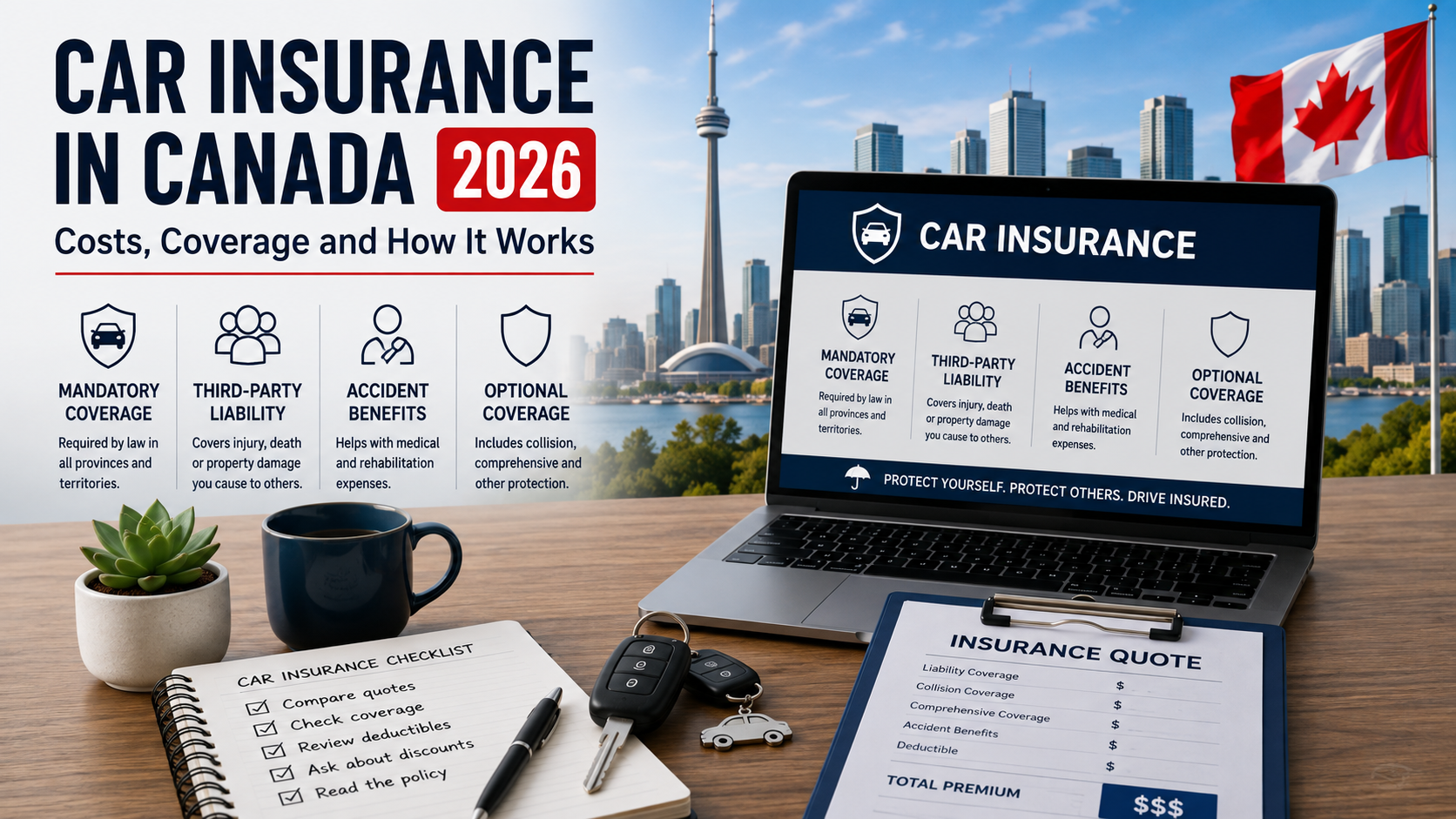
We have a separate guide explaining car insurance in Canada in 2026, including mandatory and optional coverage.
Can foreign driving experience help with car insurance?
Potentially, but recognition varies.
Licensing authorities and insurers do not necessarily evaluate foreign driving history in exactly the same way.
Bring or obtain documentation showing your driving and insurance history when possible. An insurer may have specific requirements for recognizing foreign experience or claims history.
Do not assume that receiving licensing credit automatically guarantees the same amount of insurance-history credit.
How much does getting a Canadian driver's licence cost?
There is no single Canadian price.
Costs depend on the province, the licence class and whether you need knowledge tests, road tests, licence issuance, translations, driving lessons or additional attempts.
Because government fees can change, we recommend checking the current fee schedule of your provincial licensing authority rather than relying on an estimated nationwide figure.
Driving can also add substantial recurring expenses to a household budget, including insurance, fuel, maintenance, parking and vehicle financing or depreciation.
If you are planning your overall newcomer budget, see How Much Money Do You Need to Live in Canada in 2026?.
Should you take driving lessons if you already know how to drive?
They are not necessarily required for every experienced newcomer, but a few professional lessons can be useful before a road test.
An instructor familiar with the provincial test can help identify habits that may be acceptable in your home country but conflict with Canadian testing standards or local traffic rules.
Lessons can also help newcomers become comfortable with:
- winter driving;
- four-way stops;
- school zones;
- right turns on red where permitted;
- highway merging;
- pedestrian and cyclist rules; and
- local road-test expectations.
Winter driving deserves special attention
For newcomers from warmer climates, Canadian winter driving can require a major adjustment.
Snow, ice, freezing rain, reduced visibility and longer braking distances can significantly change how a vehicle behaves.
IRCC specifically advises newcomers to become familiar with winter-driving safety and notes that winter tires are mandatory in some jurisdictions.
Check your province's tire rules and learn winter-driving techniques before severe weather arrives.
Can you use your driver's licence as identification?
A provincial driver's licence is widely used as government-issued photo identification in Canada.
This can make it useful for many everyday identity-verification situations after you become established.
However, a driver's licence does not replace immigration documents, a Social Insurance Number or other documents when those are specifically required.
If you have not completed your employment documentation yet, our guide to getting a SIN in Canada explains that separate process.
What should you bring from your home country?
If you plan to drive in Canada, consider preparing these documents before departure:
- your valid original driver's licence;
- an International Driving Permit if appropriate;
- an official driving-history document;
- an authentication letter if your destination may require one;
- records showing the original issue date or years of driving experience;
- insurance or claims-history records; and
- any translations required by your destination province.
Do not obtain expensive translations without first checking the provincial authority's rules. Some jurisdictions specify which translators or documents they will accept.
Newcomer driver's licence checklist
| Step | What to do |
|---|---|
| 1 | Check how long your foreign licence remains valid after you become a resident. |
| 2 | Find out whether your issuing jurisdiction has a licence-exchange agreement. |
| 3 | Gather your original licence and acceptable identity documents. |
| 4 | Obtain proof of previous driving experience if applicable. |
| 5 | Arrange an approved translation if your province requires one. |
| 6 | Study the official provincial driver's handbook. |
| 7 | Complete the required vision, knowledge or road tests. |
| 8 | Obtain the appropriate automobile insurance before driving a vehicle that requires it. |
| 9 | Learn local traffic and winter-driving rules. |
Common mistakes newcomers should avoid
- Assuming a foreign licence can be used indefinitely.
- Assuming every province gives newcomers the same exchange period.
- Waiting until the foreign-licence deadline is almost over before starting the process.
- Failing to obtain proof of driving experience from the home country.
- Assuming years of experience automatically eliminate all tests.
- Using an unofficial translation when an approved translator is required.
- Confusing an International Driving Permit with a Canadian driver's licence.
- Assuming licensing credit automatically equals insurance-history credit.
- Driving without appropriate automobile insurance.
- Relying on outdated exchange-agreement lists.
Driver's licence, health card and SIN: three different documents
Newcomers can easily confuse the purposes of different Canadian documents.
| Document | Main purpose |
|---|---|
| Driver's licence | Authorizes eligible holders to drive and also serves as provincial photo identification. |
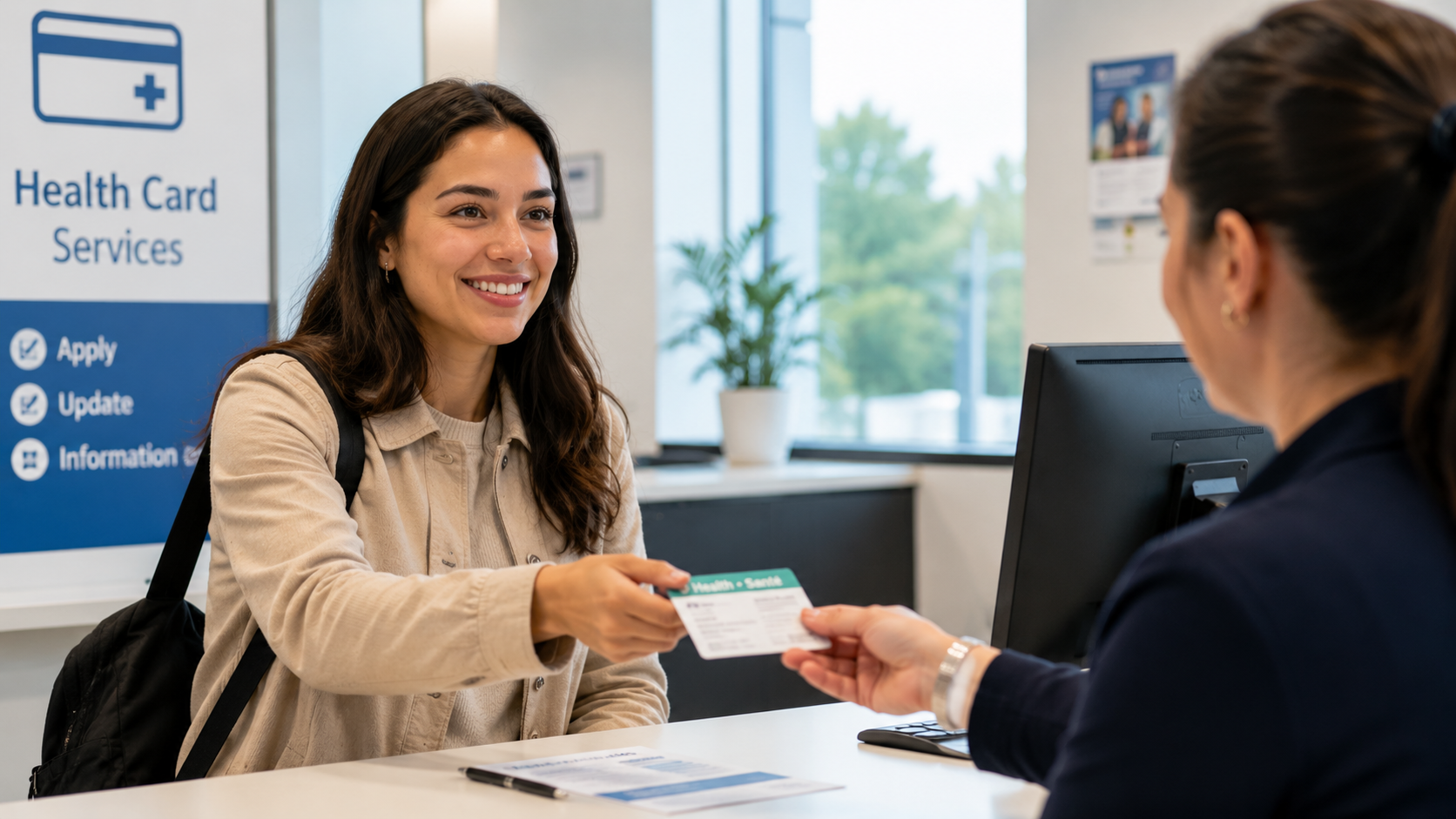
| Health card | Shows registration for eligible provincial or territorial public health coverage. |
| Social Insurance Number | Used for employment, taxes and certain government programs and benefits. |
If you are completing all three processes, see our newcomer health card guide and our SIN guide for the separate requirements.
Bottom line
Getting a driver's licence in Canada is not one standardized national process. Your province or territory determines how long you can use a foreign licence, whether your existing licence can be exchanged, how previous driving experience is recognized and which tests you must complete.
The most useful preparation often happens before you move. Bring your original licence, investigate whether an International Driving Permit is appropriate and obtain official proof of your driving history if your destination may require it.
Once you arrive, start the provincial licensing process early. Do not wait until the final days that your foreign licence is valid, especially if you may need a knowledge test, road-test appointment or additional documentation.
Important: Driver licensing requirements, reciprocal agreements, fees, testing rules and deadlines can change. This article provides general information based on official guidance available in 2026. Always verify the current requirements directly with the licensing authority in the province or territory where you live before driving or applying for a licence.
Official Sources & Further Reading
- IRCC — Driving in Canada
- Government of Ontario — Exchange an Out-of-Province Driver's Licence
- Government of Ontario — Official Driver's Handbook
- ICBC — Moving to British Columbia and Your Licence
- ICBC — Moving to B.C. From Another Country
- Government of Alberta — Exchange a Licence From Outside Alberta
- SAAQ — Canadian or Foreign Driver's Licence