Groceries are one of the most important expenses to understand when planning a monthly budget in Canada. Whether you are living alone, moving with a partner or supporting a family, food costs can take a significant share of your income.
In 2026, grocery prices remain elevated across the country. According to Statistics Canada, prices for food purchased from stores were 3.9% higher in June 2026 than a year earlier. Grocery inflation also continued to outpace overall inflation.
This guide looks at grocery prices in Canada in 2026, what common foods cost, realistic monthly grocery budgets and practical ways households can control their food spending.
How Much Do Groceries Cost in Canada in 2026?
There is no single grocery budget that works for everyone. Your monthly spending depends on where you live, how many people are in your household, what you eat and where you shop.
A practical planning range for groceries in 2026 is approximately:
| Household | Estimated Monthly Grocery Budget |
|---|---|
| 1 adult | C$350–C$550 |
| Couple | C$650–C$900 |
| Family of 3 | C$850–C$1,150 |
| Family of 4 | C$1,000–C$1,400+ |
These figures are planning estimates rather than official fixed averages. Households that cook most meals at home and actively shop for discounts may spend less, while families buying premium products, prepared foods or specialty items may spend considerably more.
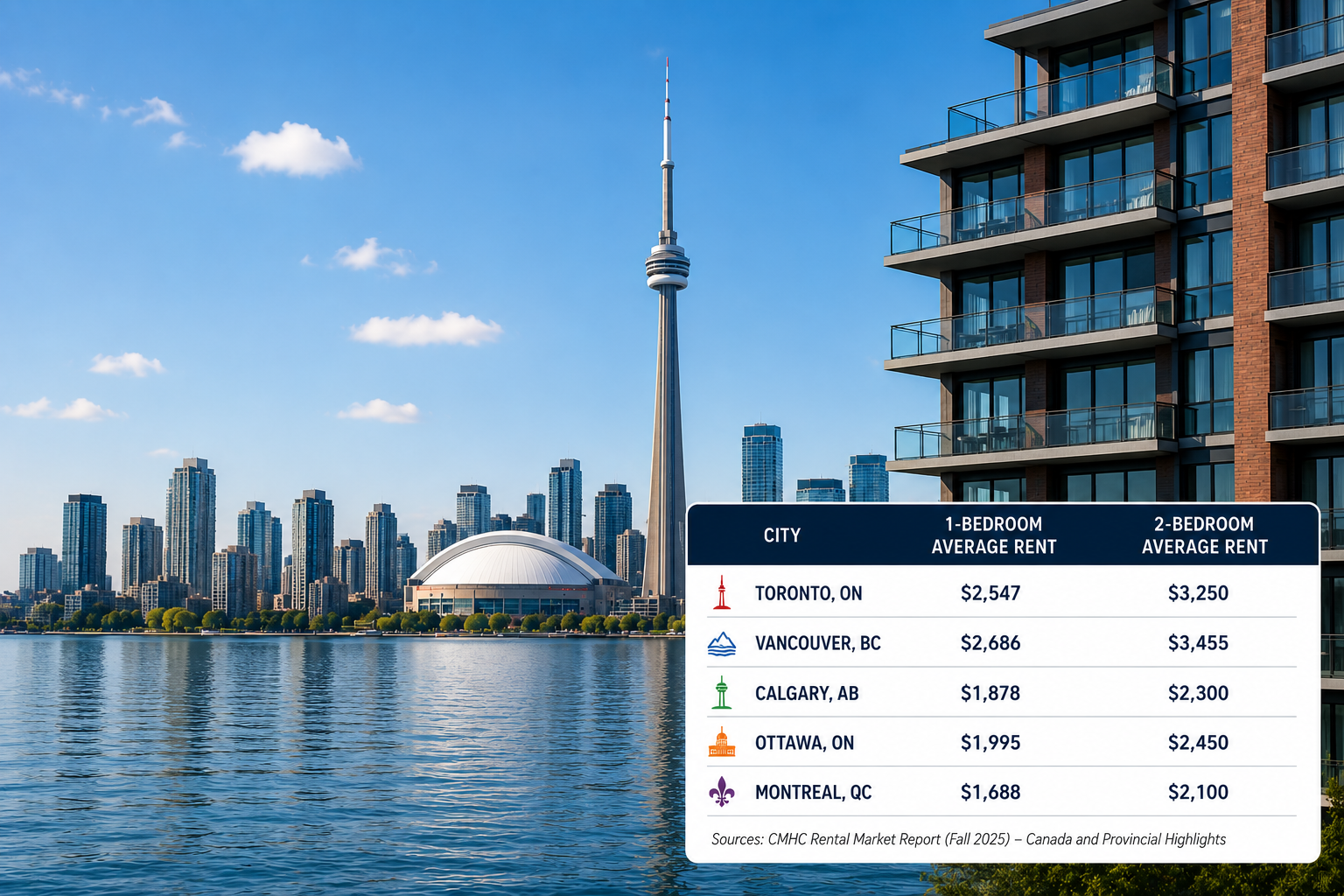
Food is also only one part of a household budget. Anyone planning a move should consider groceries alongside average rent in Canada and the broader cost of living in Canada.
Grocery Prices Are Still Rising
Statistics Canada reported that grocery prices increased 3.9% year over year in June 2026. Although that was slower than the 4.3% increase recorded in May, grocery inflation had exceeded overall inflation for 17 consecutive months.
Some categories increased faster than the overall grocery index. Fresh or frozen chicken prices were up 5.7% year over year, while bread, rolls and buns increased 6.0%.
This means shoppers may experience very different levels of inflation depending on what they regularly put in their grocery carts.
Examples of Grocery Prices in Canada
Statistics Canada publishes monthly average retail prices for dozens of food products using transaction data from Canadian retailers. The database includes products such as beef, chicken, milk, eggs, bread, rice, fruit and vegetables.
Prices vary by province, city, retailer, package size and promotional discounts, so the following ranges should be treated as practical shopping examples rather than guaranteed prices.
| Common Grocery Item | Typical Price Range |
|---|---|
| Milk | C$4–C$7 |
| 12 eggs | C$4–C$6 |
| Loaf of bread | C$3–C$5 |
| Chicken | C$12–C$18 per kg |
| Ground beef | C$12–C$18 per kg |
| Rice | C$4–C$8 |
| Apples | C$4–C$7 per kg |
| Bananas | C$1.50–C$2.50 per kg |
| Potatoes | C$4–C$8 per bag |
| Cheese | C$6–C$10 |
Because food prices change frequently, shoppers should check current local prices rather than treating any national figure as the exact amount they will pay.
How Much Should One Person Budget for Groceries?
A single adult who prepares most meals at home could reasonably begin with a grocery budget of roughly C$350 to C$550 per month.
That works out to approximately C$80 to C$125 per week.
Someone who shops at discount supermarkets, buys store brands and plans meals around promotions may stay toward the lower end. A person who regularly buys organic foods, premium meat, imported products or prepared meals can easily spend more.
For newcomers, keeping grocery costs under control during the first few months can be especially useful because there may also be expenses related to deposits, furniture, transportation and setting up services. Our guide to moving to Canada covers several of these early expenses.
How Much Should a Couple Budget?
A couple could start with a monthly grocery budget of approximately C$650 to C$900.
Two people do not necessarily spend exactly twice as much as one person. Larger packages can offer better value, and ingredients can be shared across multiple meals.
Meal planning becomes increasingly important because reducing food waste can make a noticeable difference over an entire month.
How Much Does a Family of Four Spend on Groceries?
A family of four may need approximately C$1,000 to C$1,400 or more per month for groceries depending on the ages of the children, dietary preferences and location.
Families with teenagers or specialized dietary requirements may spend substantially more.
Housing costs also influence how much money remains available for food. Families comparing locations may want to review our guide to the cheapest places to live in Canada before choosing a city.
Does Grocery Spending Vary Across Canada?
Yes. Grocery prices are not identical across the country.
Transportation costs, local competition, supply chains and geography can all influence prices. Remote and northern communities can face particularly high food costs because transporting products over long distances is expensive.
Even within the same province, prices can differ between retailers and communities.
This is one reason comparing salary alone does not tell you how affordable a location will be. Our guide to the average salary in Canada can be considered alongside housing, transportation and grocery expenses.
How to Spend Less on Groceries in Canada
Small changes in shopping habits can produce meaningful savings over a year.
Health Canada recommends several strategies for eating on a budget, including planning purchases, comparing unit prices, shopping sales and considering store-brand alternatives.
- Plan meals before shopping. Decide what you will cook during the week and build your grocery list around those meals.
- Compare unit prices. The largest package is not automatically the best deal.
- Buy store brands. Generic products are often cheaper than major brands.
- Watch weekly promotions. Build some meals around products that are discounted.
- Freeze food. Meat, bread and many fruits and vegetables can be frozen to reduce waste.
- Buy seasonal produce. Fruits and vegetables are often cheaper when they are in season.
- Use affordable proteins. Beans, lentils and other legumes can cost less than many meat products.
- Avoid unnecessary convenience foods. Pre-cut, individually packaged and prepared foods often cost more.
Groceries vs Eating at Restaurants
Cooking at home is generally one of the easiest ways to keep food spending predictable.
A household that frequently orders delivery or eats at restaurants should maintain a separate dining-out budget rather than including everything under groceries.
This distinction makes it easier to identify where your money is actually going each month.
A Sample Monthly Grocery Budget for One Person
Here is an example of how a C$450 monthly grocery budget could be divided:
| Category | Monthly Budget |
|---|---|
| Meat, fish and protein | C$110 |
| Fruit and vegetables | C$100 |
| Dairy and eggs | C$65 |
| Bread, rice, pasta and grains | C$60 |
| Pantry items | C$55 |
| Snacks and miscellaneous | C$60 |
| Total | C$450 |
This is only an example. Someone who eats more meat may allocate more to protein, while another household might spend more on produce.
Planning Your Total Cost of Living
Groceries should never be considered in isolation when calculating how much it costs to live in Canada.
A realistic monthly budget should include:
- Rent
- Groceries
- Utilities
- Transportation
- Phone and internet
- Insurance
- Personal expenses
- Savings and emergencies
For newcomers, establishing a Canadian bank account and credit history are also important financial steps. You can compare newcomer bank account offers in Canada, read our guide to the best bank accounts for newcomers, and learn how to build credit in Canada.
Are Groceries Expensive in Canada?
For many households, groceries remain a significant monthly expense in 2026. Food prices are still increasing, although the pace of grocery inflation can change from month to month.
A single adult may want to begin with roughly C$350 to C$550 per month, while a family of four could require C$1,000 to C$1,400 or more.
The best budget is ultimately the one based on your household size, city, dietary needs and shopping habits.
Prices and economic conditions can change. The figures in this article are intended as general budgeting estimates. Check current Statistics Canada data and local retailers when preparing your personal budget.